Space X stock rises 6.1% despite first lockup expiration wave
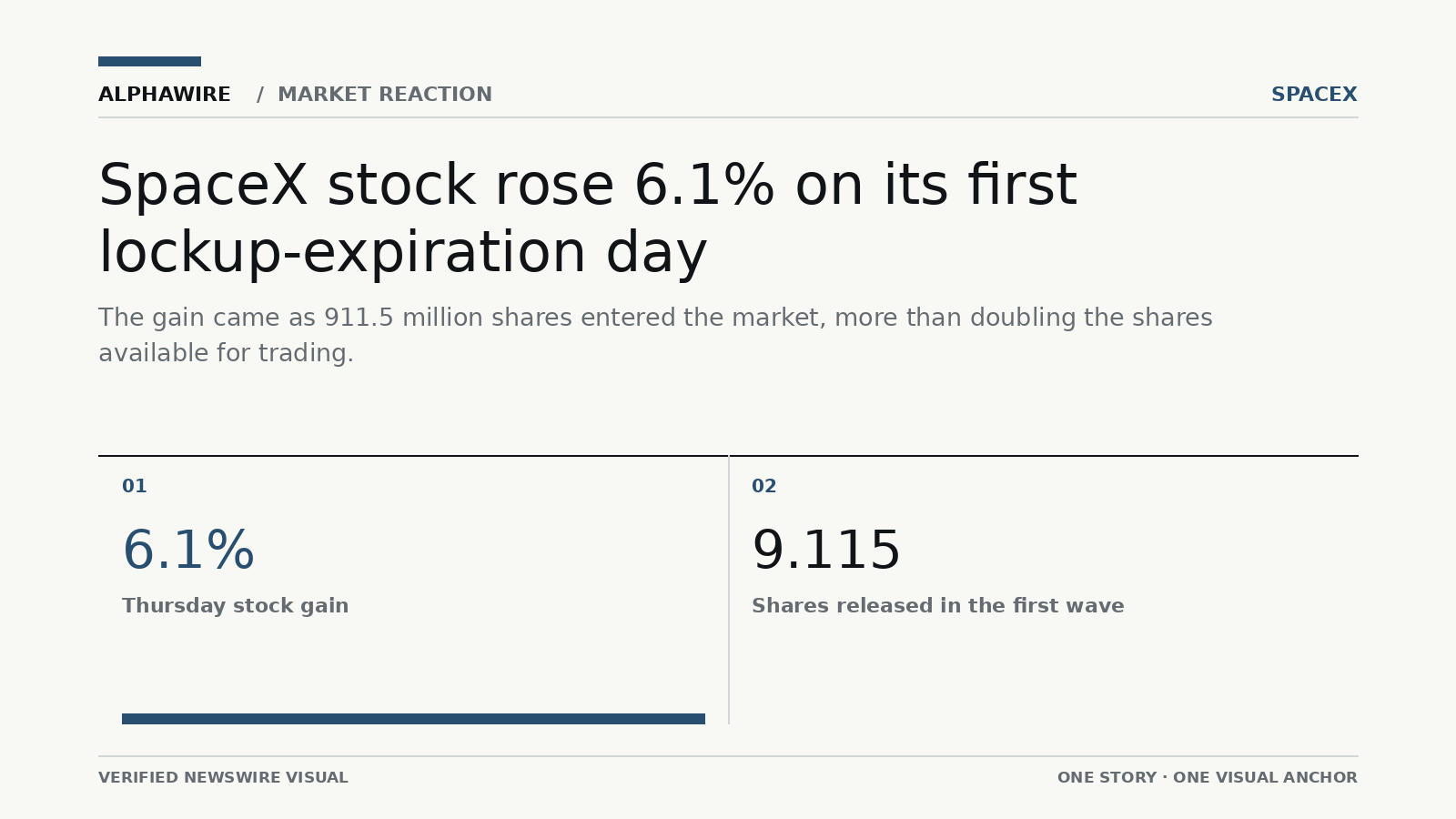
SpaceX faced its first wave of lockup expirations on Thursday, more than doubling the number of shares available for trading. The stock nevertheless closed up 6.1%, while trading volume surged, outperforming market expectations. SpaceX’s initial public offering set a record as the largest in U.S. history, but less than 5% of its shares were initially available for public trading. Lockup restrictions on additional share sales by insiders, employees and early investors are expected to expire in stages over the coming months. Thursday’s first release involved 911.5 million shares, in addition to the approximately 639 million shares sold in the IPO, bringing more shares to the market. When the broader lockup period expires on Dec. 8, the proportion of SpaceX’s potential freely tradable shares will rise to 40% of total shares outstanding. The remaining 60%, including shares held by Elon Musk, will remain locked up until mid-2027. SpaceX shares have fallen steadily since the company went public. The stock plunged about 14% on Wednesday after its earnings report intensified market concerns about operating losses and the company’s plans for AI spending.
SpaceX’s initial public offering set a record as the largest in U.S. history, but less than 5% of its shares were initially available for public trading.
Lockup restrictions on additional share sales by insiders, employees and early investors are expected to expire in stages over the coming months. Thursday’s first release involved 911.5 million shares, in addition to the approximately 639 million shares sold in the IPO, bringing more shares to the market.
When the broader lockup period expires on Dec. 8, the proportion of SpaceX’s potential freely tradable shares will rise to 40% of total shares outstanding. The remaining 60%, including shares held by Elon Musk, will remain locked up until mid-2027.
SpaceX shares have fallen steadily since the company went public. The stock plunged about 14% on Wednesday after its earnings report intensified market concerns about operating losses and the company’s plans for AI spending.