Disney Maps Global Expansion as Parks Add Attractions and Cruise Fleet Grows
Walt Disney Co. is entering a period of intensive global expansion. On Aug. 6, the company reported fiscal third-quarter 2026 revenue of $25.2 billion and pretax profit of $3.6 billion, up 14% from a year earlier. Its Experiences segment stood out, generating $9.968 billion in revenue, up 10%, while global attendance also rose 4% year over year. Beyond the financial results, Disney signaled a clear expansion agenda. It plans to increase its cruise fleet to 13 ships by 2030. New attractions are also planned or under development at parks in Shanghai, Hong Kong, Paris and Orlando, while Abu Dhabi is set to receive a new resort. The company’s reliance on powerful intellectual property will bring expansion opportunities, but operating differently across markets remains a challenge. Parks and streaming entertainment again served as key drivers of Disney’s performance. In fiscal third-quarter 2026, revenue rose 7% year over year to $25.2 billion, while pretax profit increased 14% to $3.6 billion. Net income attributable to Disney was $2.638 billion, down 50% from a year earlier. All three major segments—entertainment, sports and experiences—contributed to quarterly revenue. Entertainment revenue reached $11.345 billion, up 6%; sports revenue was $4.5 billion, up 4%; and Experiences revenue was $9.968 billion, up 10%. Within Experiences, theme-park ticket revenue was $3.253 billion in the third quarter, up 9%. Consumer-products revenue increased 7%. Disney said growth in its global theme-park and related businesses reflected increases in both attendance and per-capita spending. Disney also reported that global attendance rose 4% year over year in fiscal third-quarter 2026. Walt Disney World Resort in Orlando was particularly strong, while additional cruise capacity provided another boost to overall growth. At the same time, Disney outlined a global expansion plan. The company said it is continuing to invest to ensure that this growth can be sustained over the long term. Major projects are progressing worldwide, including expansions of theme parks and resorts and the enlargement of Disney’s cruise fleet. Disney plans to have 13 ships by 2030. On March 10, 2026, the Disney Adventure began its maiden voyage from Singapore, becoming the eighth ship in the fleet. Disney has also continued investing in its theme-park and resort business, with numerous new projects in the pipeline. They include a Spider-Man-themed land at Shanghai Disney Resort; Marvel-themed facilities at Hong Kong Disneyland Resort; a Lion King-themed land at Disneyland Paris; Coco-themed facilities and an Avatar-themed experience at Disneyland Resort in California; and a villains-themed land, a Monsters, Inc. area and a Cars-themed area at Walt Disney World Resort in Orlando. Shanghai Disney is expanding its ninth themed land, the Spider-Man-themed land. The final section of the attraction’s signature red track was installed earlier, and the land is expected to open in the near future. Once completed, it will feature the resort’s first large-scale Marvel attraction, along with new shopping, dining and entertainment experiences. Shanghai Disney is also building its third and fourth theme-park hotels. As Disney parks around the world continue to add new attractions, a new resort is also planned for Abu Dhabi. The Abu Dhabi Disney theme-park resort will open in the future and will be the company’s seventh Disney theme-park resort worldwide. Wu Liyun, a professor at the China Academy of Culture and Tourism Industries at Beijing International Studies University, said theme parks are typical repeat-consumption businesses. Without regular product updates, they can struggle to meet visitors’ changing needs, she said. Continued innovation is necessary to sustain consumer interest and a park’s long-term appeal. The rapid rise of local theme parks in various countries is also creating strong competition for Disney. Against that backdrop, Disney must continually update its products and incorporate new technology and experiences into its parks so visitors have fresh reasons to return, thereby strengthening and improving its competitiveness, Wu said. Lin Huanjie, president of the China Institute of Theme Park Studies, said Disney has consistently refreshed its content and projects and introduced new elements to keep its brand and products dynamic. That approach has helped Disney maintain strong appeal and competitiveness in the global theme-park market, he said. As Disney continues to expand, balancing brand consistency with localized operations is a major challenge. Earlier this year, Shanghai Disney reversed a long-standing no-refund rule and revised its ticket-refund and change policies. Under the new rules, tickets are subject to a tiered refund schedule, and visitors can apply for a full refund up to seven days in advance. The change indicates that Shanghai Disney is moving toward a model more closely aligned with China’s local consumer market. Wu said differentiated operations are a key issue Disney must address as it expands globally. The company needs to maintain consistent service standards and a basic product system worldwide, while also adapting its services and management methods to the cultural customs and consumption habits of individual countries and regions. Such localized innovation, based on differences in local cultural and consumption preferences, is important both for creating distinct products in different markets and for improving competitiveness and accelerating integration into local markets, she said. Lin said that, particularly after the launches of the Hong Kong and Shanghai resorts, Disney began deliberately incorporating local characteristics into its entertainment experiences. Through operating in different markets, Disney gradually recognized that many visitors wanted to learn more about the culture of their own regions. The company therefore began actively incorporating local cultural features, a shift that has attracted large numbers of local visitors as well as travelers from other countries and regions, he said. Lin said Disney now emphasizes the inclusion of local cultural elements in the development of every new project worldwide. The strategy reflects considerations including cultural awareness, cultural distinctiveness and the richness of entertainment content, and has become a necessary part of Disney’s global operations, he said.
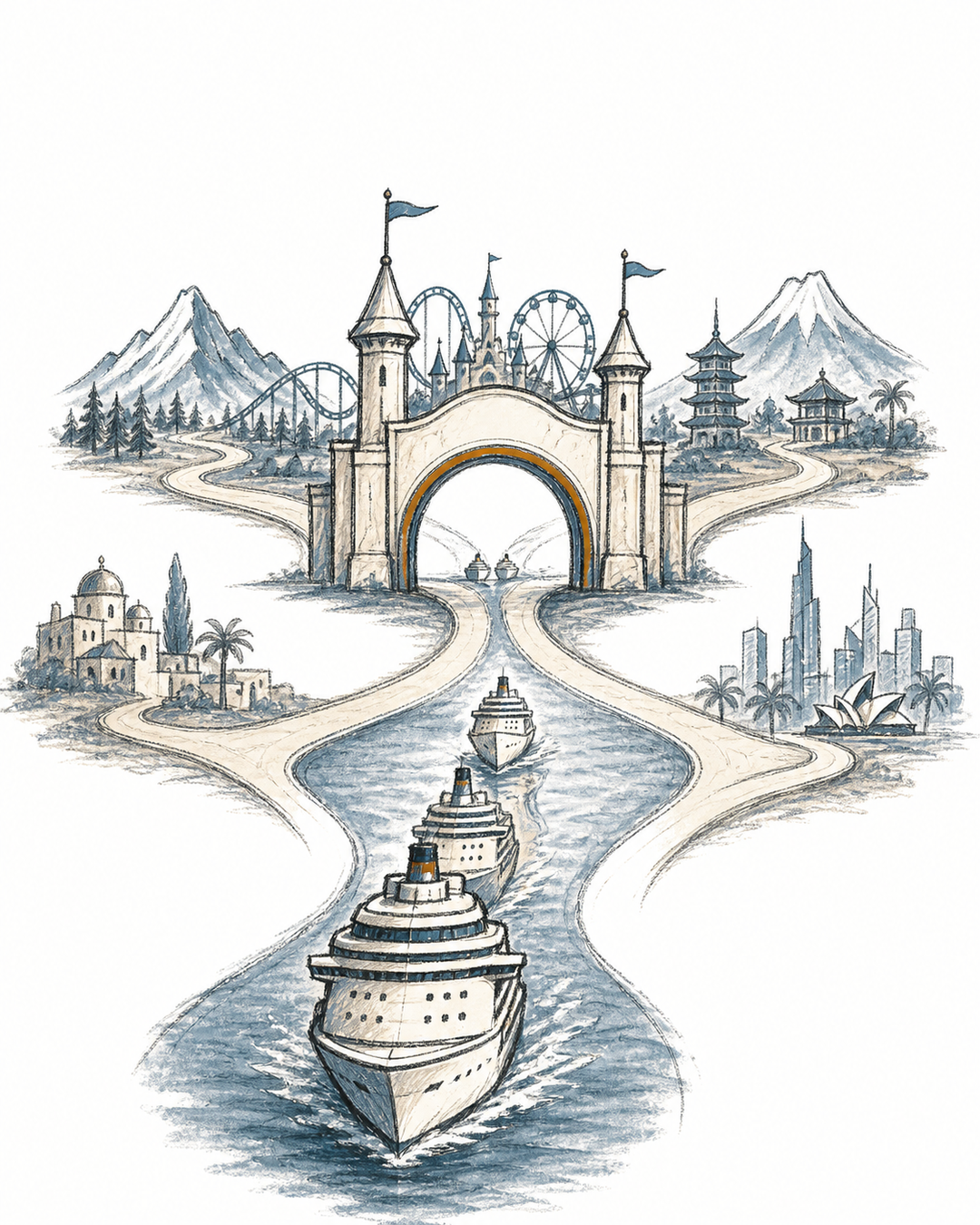
Beyond the financial results, Disney signaled a clear expansion agenda. It plans to increase its cruise fleet to 13 ships by 2030. New attractions are also planned or under development at parks in Shanghai, Hong Kong, Paris and Orlando, while Abu Dhabi is set to receive a new resort. The company’s reliance on powerful intellectual property will bring expansion opportunities, but operating differently across markets remains a challenge.
Parks and streaming entertainment again served as key drivers of Disney’s performance. In fiscal third-quarter 2026, revenue rose 7% year over year to $25.2 billion, while pretax profit increased 14% to $3.6 billion. Net income attributable to Disney was $2.638 billion, down 50% from a year earlier.
All three major segments—entertainment, sports and experiences—contributed to quarterly revenue. Entertainment revenue reached $11.345 billion, up 6%; sports revenue was $4.5 billion, up 4%; and Experiences revenue was $9.968 billion, up 10%.
Within Experiences, theme-park ticket revenue was $3.253 billion in the third quarter, up 9%. Consumer-products revenue increased 7%. Disney said growth in its global theme-park and related businesses reflected increases in both attendance and per-capita spending.
Disney also reported that global attendance rose 4% year over year in fiscal third-quarter 2026. Walt Disney World Resort in Orlando was particularly strong, while additional cruise capacity provided another boost to overall growth.
At the same time, Disney outlined a global expansion plan. The company said it is continuing to invest to ensure that this growth can be sustained over the long term.
Major projects are progressing worldwide, including expansions of theme parks and resorts and the enlargement of Disney’s cruise fleet. Disney plans to have 13 ships by 2030. On March 10, 2026, the Disney Adventure began its maiden voyage from Singapore, becoming the eighth ship in the fleet.
Disney has also continued investing in its theme-park and resort business, with numerous new projects in the pipeline. They include a Spider-Man-themed land at Shanghai Disney Resort; Marvel-themed facilities at Hong Kong Disneyland Resort; a Lion King-themed land at Disneyland Paris; Coco-themed facilities and an Avatar-themed experience at Disneyland Resort in California; and a villains-themed land, a Monsters, Inc. area and a Cars-themed area at Walt Disney World Resort in Orlando.
Shanghai Disney is expanding its ninth themed land, the Spider-Man-themed land. The final section of the attraction’s signature red track was installed earlier, and the land is expected to open in the near future. Once completed, it will feature the resort’s first large-scale Marvel attraction, along with new shopping, dining and entertainment experiences. Shanghai Disney is also building its third and fourth theme-park hotels.
As Disney parks around the world continue to add new attractions, a new resort is also planned for Abu Dhabi. The Abu Dhabi Disney theme-park resort will open in the future and will be the company’s seventh Disney theme-park resort worldwide.
Wu Liyun, a professor at the China Academy of Culture and Tourism Industries at Beijing International Studies University, said theme parks are typical repeat-consumption businesses. Without regular product updates, they can struggle to meet visitors’ changing needs, she said. Continued innovation is necessary to sustain consumer interest and a park’s long-term appeal. The rapid rise of local theme parks in various countries is also creating strong competition for Disney. Against that backdrop, Disney must continually update its products and incorporate new technology and experiences into its parks so visitors have fresh reasons to return, thereby strengthening and improving its competitiveness, Wu said.
Lin Huanjie, president of the China Institute of Theme Park Studies, said Disney has consistently refreshed its content and projects and introduced new elements to keep its brand and products dynamic. That approach has helped Disney maintain strong appeal and competitiveness in the global theme-park market, he said.
As Disney continues to expand, balancing brand consistency with localized operations is a major challenge.
Earlier this year, Shanghai Disney reversed a long-standing no-refund rule and revised its ticket-refund and change policies. Under the new rules, tickets are subject to a tiered refund schedule, and visitors can apply for a full refund up to seven days in advance. The change indicates that Shanghai Disney is moving toward a model more closely aligned with China’s local consumer market.
Wu said differentiated operations are a key issue Disney must address as it expands globally. The company needs to maintain consistent service standards and a basic product system worldwide, while also adapting its services and management methods to the cultural customs and consumption habits of individual countries and regions. Such localized innovation, based on differences in local cultural and consumption preferences, is important both for creating distinct products in different markets and for improving competitiveness and accelerating integration into local markets, she said.
Lin said that, particularly after the launches of the Hong Kong and Shanghai resorts, Disney began deliberately incorporating local characteristics into its entertainment experiences. Through operating in different markets, Disney gradually recognized that many visitors wanted to learn more about the culture of their own regions. The company therefore began actively incorporating local cultural features, a shift that has attracted large numbers of local visitors as well as travelers from other countries and regions, he said.
Lin said Disney now emphasizes the inclusion of local cultural elements in the development of every new project worldwide. The strategy reflects considerations including cultural awareness, cultural distinctiveness and the richness of entertainment content, and has become a necessary part of Disney’s global operations, he said.