Why South Korea’s Stock Market Fell Into a Leverage Spiral
South Korea’s stock market surged earlier this year on enthusiasm for artificial intelligence and semiconductors, then suffered a sharp correction. Many retail investors chased popular technology stocks through margin trading and highly leveraged exchange-traded funds. When the market abruptly turned lower, forced liquidations pushed share prices down further and amplified volatility. Analysts say South Korea’s retail-investor leverage boom reflects several overlapping forces: shifting regulatory policies, financial innovation that has lowered the barrier to using leverage, social media that has intensified speculative sentiment, and growing wealth anxiety among younger people. Regulatory signals have often appeared inconsistent. Observers say market regulators have discouraged retail investors from increasing leverage, but South Korea’s capital-market policy has long oscillated between improving market vitality and preventing financial risks. That tension has, in practice, lowered the barrier to leverage use. Because of corporate-governance concerns and low shareholder returns, many South Korean listed companies have traditionally traded at lower valuations than their international peers, a phenomenon known as the “Korea discount.” The government has long sought to improve market liquidity and attract more capital by expanding investment tools such as ETFs and derivatives. South Korea’s financial regulation also has a pro-cyclical quality. During bull markets, regulators want to preserve market activity and may ease some restrictions. When volatility rises, they tighten those limits. Retail investors can interpret relaxed restrictions as an official endorsement of market conditions, prompting them to take on more risk and, in some cases, borrow to buy stocks. By the time volatility increases and regulators tighten policy, large margin positions may already have accumulated. If share prices fall quickly and margin accounts hit warning levels, forced liquidations can occur in clusters, creating a negative feedback loop of falling prices, liquidations and further declines. Analysts say this creates a policy dilemma. When markets rise, easing measures can easily be interpreted as a signal that risk appetite is increasing. When markets fall, regulators face pressure to tighten policy again as deleveraging pressures and volatility intensify. Meanwhile, financial “innovation” on the supply side has continued. In recent years, South Korea’s financial market has expanded its range of leveraged products, from margin trading to twofold- and threefold-leveraged ETFs and high-risk products linked to overseas markets. Ordinary investors can now obtain trading exposure far greater than their principal with relative ease. These products have partly served the government’s goal of making South Korea’s capital market more competitive and reducing capital outflows. Against a backdrop of rising semiconductor stocks, regulators approved the listing in the first half of this year of single-stock leveraged ETFs tied to Samsung Electronics and SK Hynix, two high-weight technology stocks. The products offered investors exposure equivalent to two times the underlying stock’s daily gain or loss. Retail money flowed into the products far faster than the market expected. The single-stock leveraged ETFs bought more as share prices rose and sold more aggressively as they fell, amplifying late-session trading volume and individual-stock volatility and creating an unintended shock for regulators. After repeated sharp market swings and the collapse of many retail investors’ positions, South Korean regulators tightened margin requirements for single-stock leveraged trading, prohibited the listing of new single-stock leveraged products and began studying measures to limit individual investment amounts, seeking to curb excessive speculation. Social media, financial livestreamers and investment communities have also fueled retail-investor enthusiasm. Whether the focus is semiconductors, artificial intelligence, U.S. technology stocks or cryptocurrencies, South Korea’s public conversation has often encouraged speculation. “Using leverage appropriately” has even been presented as a form of investing skill, while its underlying risks were overlooked. Why are South Korean retail investors willing to believe that leverage can create wealth? Analysts link the behavior to accumulated structural problems in the domestic economy and sluggish economic growth. Many young people have turned to the capital markets after watching stocks and cryptocurrencies rise, gradually developing a fear that missing out would leave them behind. In an environment that encourages speculation, that fear has produced a powerful herd effect. Retail investors have used leverage to make up for limited principal and pursue rapid gains. South Korean retail investors have long been known in international financial markets for their high risk appetite. They not only trade domestic stocks with substantial leverage but also buy highly leveraged ETFs and volatile technology stocks in the U.S. market and actively participate in cryptocurrency trading, reflecting a highly speculative, high-risk-for-high-reward mindset. On the surface, leveraged stock trading appears to be speculation aimed at higher returns. More deeply, analysts say, it is tied to collective anxiety over asset appreciation and upward social mobility. Leverage can magnify gains, but it can also multiply losses, making forced liquidations and market stampedes more likely. One analysis says South Korea’s retail-investor financing boom reflects more than a capital-market problem. It also exposes deeper tensions, including slowing economic growth, reduced social mobility and widening inequality. Financial leverage, however, cannot replace economic growth. A healthy capital market should support the real economy and serve as an important engine of wealth creation, rather than becoming a “gambling table” on which more people hope to change their lives.
Analysts say South Korea’s retail-investor leverage boom reflects several overlapping forces: shifting regulatory policies, financial innovation that has lowered the barrier to using leverage, social media that has intensified speculative sentiment, and growing wealth anxiety among younger people.
Regulatory signals have often appeared inconsistent. Observers say market regulators have discouraged retail investors from increasing leverage, but South Korea’s capital-market policy has long oscillated between improving market vitality and preventing financial risks. That tension has, in practice, lowered the barrier to leverage use.
Because of corporate-governance concerns and low shareholder returns, many South Korean listed companies have traditionally traded at lower valuations than their international peers, a phenomenon known as the “Korea discount.” The government has long sought to improve market liquidity and attract more capital by expanding investment tools such as ETFs and derivatives.
South Korea’s financial regulation also has a pro-cyclical quality. During bull markets, regulators want to preserve market activity and may ease some restrictions. When volatility rises, they tighten those limits.
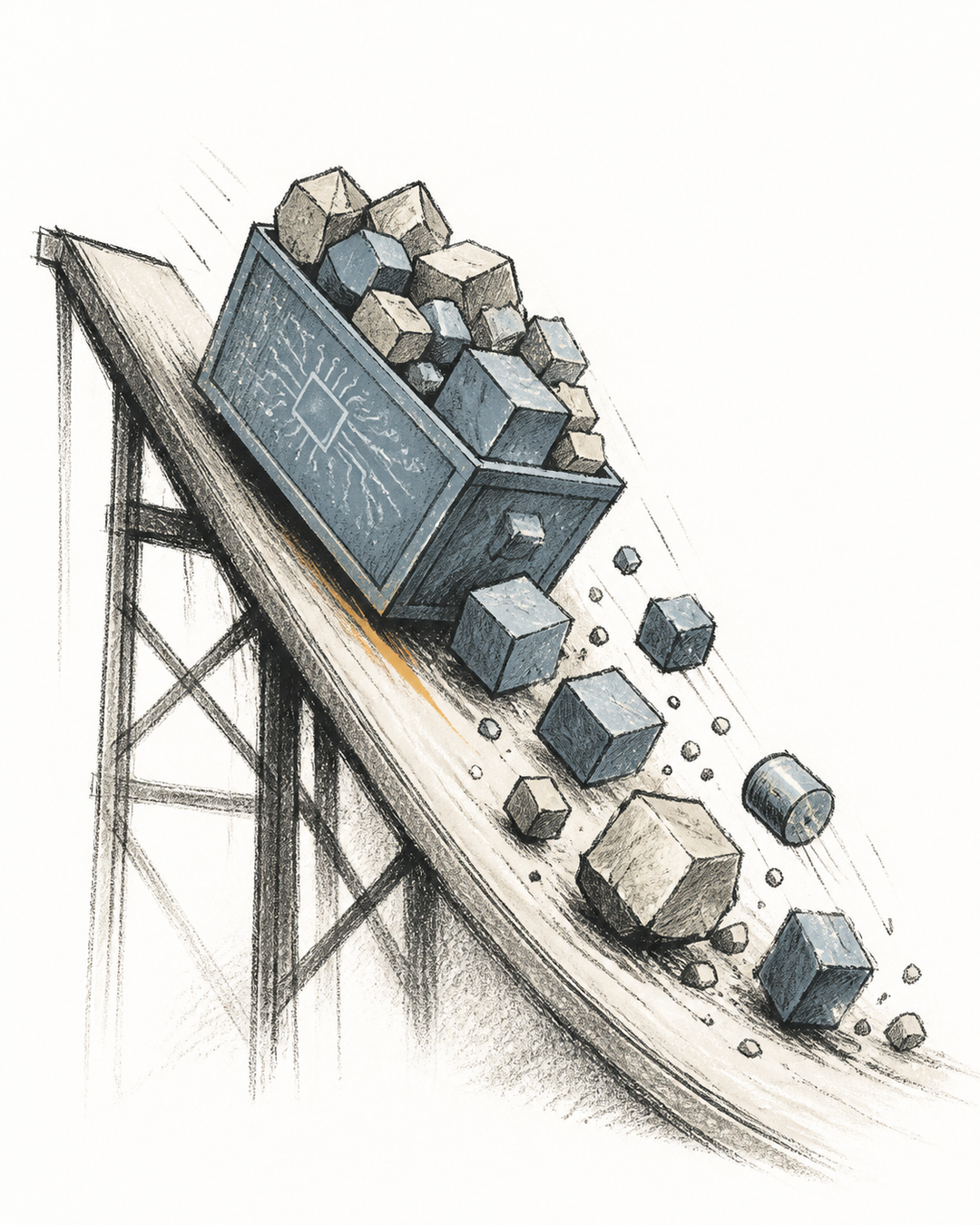
Retail investors can interpret relaxed restrictions as an official endorsement of market conditions, prompting them to take on more risk and, in some cases, borrow to buy stocks. By the time volatility increases and regulators tighten policy, large margin positions may already have accumulated. If share prices fall quickly and margin accounts hit warning levels, forced liquidations can occur in clusters, creating a negative feedback loop of falling prices, liquidations and further declines.
Analysts say this creates a policy dilemma. When markets rise, easing measures can easily be interpreted as a signal that risk appetite is increasing. When markets fall, regulators face pressure to tighten policy again as deleveraging pressures and volatility intensify.
Meanwhile, financial “innovation” on the supply side has continued. In recent years, South Korea’s financial market has expanded its range of leveraged products, from margin trading to twofold- and threefold-leveraged ETFs and high-risk products linked to overseas markets. Ordinary investors can now obtain trading exposure far greater than their principal with relative ease.
These products have partly served the government’s goal of making South Korea’s capital market more competitive and reducing capital outflows. Against a backdrop of rising semiconductor stocks, regulators approved the listing in the first half of this year of single-stock leveraged ETFs tied to Samsung Electronics and SK Hynix, two high-weight technology stocks. The products offered investors exposure equivalent to two times the underlying stock’s daily gain or loss.
Retail money flowed into the products far faster than the market expected. The single-stock leveraged ETFs bought more as share prices rose and sold more aggressively as they fell, amplifying late-session trading volume and individual-stock volatility and creating an unintended shock for regulators.
After repeated sharp market swings and the collapse of many retail investors’ positions, South Korean regulators tightened margin requirements for single-stock leveraged trading, prohibited the listing of new single-stock leveraged products and began studying measures to limit individual investment amounts, seeking to curb excessive speculation.
Social media, financial livestreamers and investment communities have also fueled retail-investor enthusiasm. Whether the focus is semiconductors, artificial intelligence, U.S. technology stocks or cryptocurrencies, South Korea’s public conversation has often encouraged speculation. “Using leverage appropriately” has even been presented as a form of investing skill, while its underlying risks were overlooked.
Why are South Korean retail investors willing to believe that leverage can create wealth? Analysts link the behavior to accumulated structural problems in the domestic economy and sluggish economic growth. Many young people have turned to the capital markets after watching stocks and cryptocurrencies rise, gradually developing a fear that missing out would leave them behind. In an environment that encourages speculation, that fear has produced a powerful herd effect.
Retail investors have used leverage to make up for limited principal and pursue rapid gains. South Korean retail investors have long been known in international financial markets for their high risk appetite. They not only trade domestic stocks with substantial leverage but also buy highly leveraged ETFs and volatile technology stocks in the U.S. market and actively participate in cryptocurrency trading, reflecting a highly speculative, high-risk-for-high-reward mindset.
On the surface, leveraged stock trading appears to be speculation aimed at higher returns. More deeply, analysts say, it is tied to collective anxiety over asset appreciation and upward social mobility. Leverage can magnify gains, but it can also multiply losses, making forced liquidations and market stampedes more likely.
One analysis says South Korea’s retail-investor financing boom reflects more than a capital-market problem. It also exposes deeper tensions, including slowing economic growth, reduced social mobility and widening inequality. Financial leverage, however, cannot replace economic growth. A healthy capital market should support the real economy and serve as an important engine of wealth creation, rather than becoming a “gambling table” on which more people hope to change their lives.