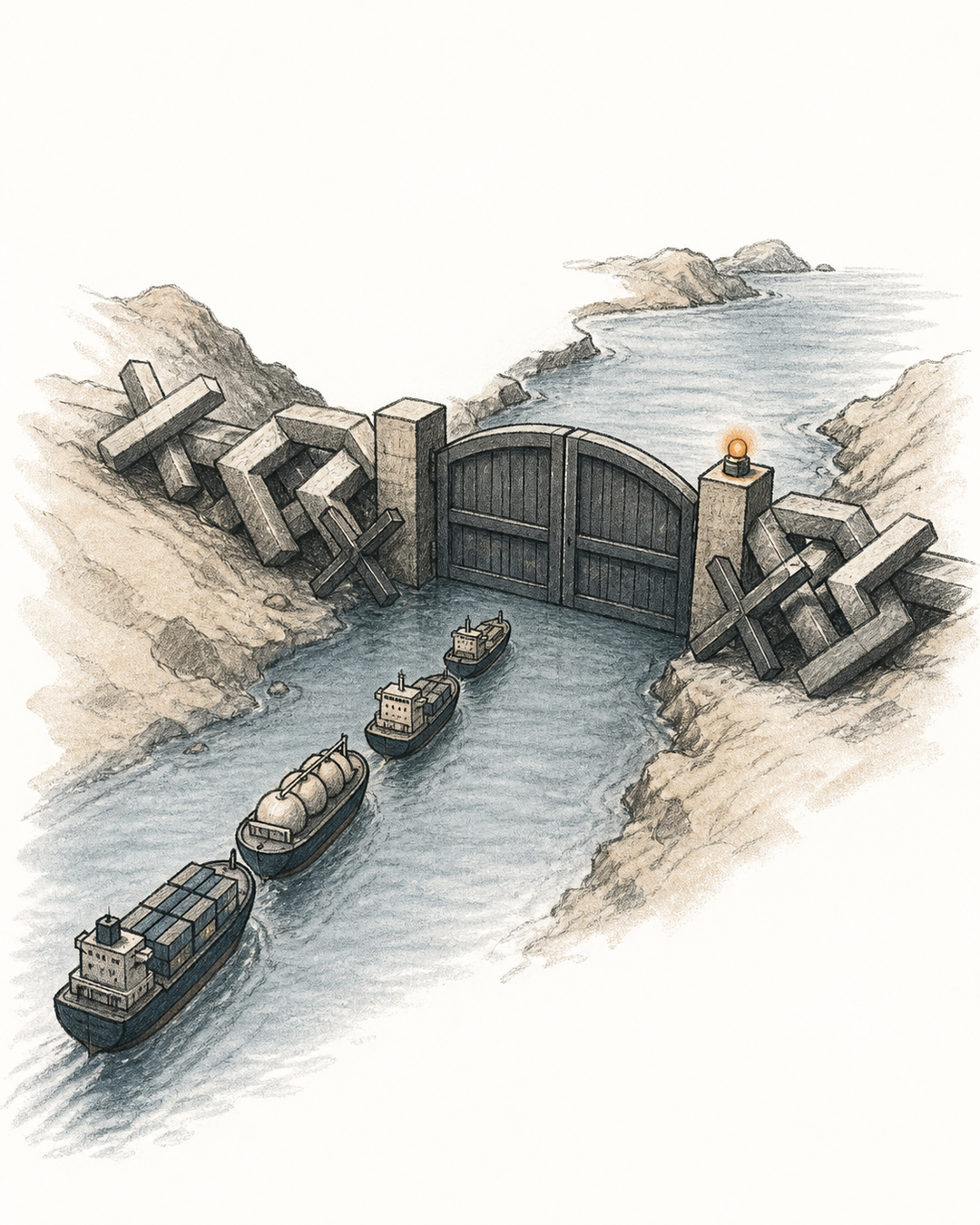
Iran Says Strait of Hormuz Reopening Depends on U.S. Meeting Key Conditions
Iranian Foreign Minister Abbas Araghchi said on Aug. 8 that Iran and Oman were “close” to reaching an agreement on navigation through the Strait of Hormuz, but that this would not mean the strait would immediately reopen. Reopening also depends on other conditions, including compensation from the United States for violating a memorandum of understanding. An Iranian official said the strait would definitely reopen once the United States accepted Iran’s conditions. Oman’s Foreign Ministry said the same day that talks on navigation arrangements were progressing in a positive and constructive atmosphere. Araghchi said the negotiations were continuing and that, because of their technical complexity, the parties were working to establish a temporary route. A spokesman for Iran’s Islamic Revolutionary Guard Corps said reopening the Strait of Hormuz was unrelated to the talks between Iran and Oman. He said it depended on whether the United States fully accepted Iran’s conditions and stopped interfering in regional negotiations. “Once the United States accepts Iran’s conditions, the strait will definitely reopen,” he said. Zolfaqari, secretary of Iran’s Supreme National Security Council, listed several conditions Iran considers essential to reopening the strait. They include a permanent end to aggression against Iran and its regional allies; lifting the maritime blockade of Iran and withdrawing military forces from areas around the country; and lifting what Iran called illegal and unjust sanctions. Zolfaqari said the Strait of Hormuz would remain closed until the United States corrected its conduct. Oman’s Foreign Ministry said talks on navigation arrangements were making progress while balancing the interests of all parties. It urged all sides to avoid actions that could affect the negotiations or the progress already achieved. After the United States and Iran signed a memorandum of understanding in mid-June, the Strait of Hormuz briefly reopened with two shipping lanes: a northern lane on the Iranian side under Iranian control and a southern lane on the Omani side supported by the U.S. military. The two countries later clashed again over the “dual-lane” arrangement. The U.S. military launched another airstrike on Iran, and Iran announced on July 12 that it was closing the strait again. Iran and Oman have continued consultations and negotiations on navigation through the strait. Iran’s Foreign Ministry said on Aug. 5 that an agreement with Oman on the passage of commercial vessels through the Strait of Hormuz was close to finalization and that the parties had agreed on the geographic coordinates of the proposed route. Under the new arrangement, the existing temporary route would be closed, and a considerable share of vessels’ entry and exit routes would pass through Iranian territorial waters. That would represent a new transit model, unlike the system used over the past 60 years. The new route would also be temporary and is expected to remain usable for two to four months. U.S. Vice President JD Vance said Iran had told the United States that it did not plan to charge transit fees for passage through the Strait of Hormuz. He also said the United States and Iran were in dialogue and that their conflict remained in the “middle game.” Vance said Washington’s immediate priority was to increase as much as possible the amount of oil and natural gas shipped through the Strait of Hormuz. The United States was watching to see whether Iran was willing to make the necessary long-term changes to establish better relations with Washington, he said. If Iran was unwilling, the United States would continue applying pressure. Vance said the United States was seeking to establish a navigation system that would ensure the safe passage of vessels. The system would include mine-clearing operations and would require Iran to promise not to fire on commercial ships. Vance said Iran had told the United States that it had no plans to impose transit fees on the strait. Iran had not responded to those remarks at the time of publication. Iran has consistently denied that it is negotiating with the United States, while Washington has insisted that talks have resumed. A U.S. official said on Aug. 7 that the Iran-Oman talks on the Strait of Hormuz had made progress and were expected to produce an agreement soon. The official said that once an agreement was reached and commercial shipping through the strait resumed, the United States would lift its maritime blockade of Iran. The outlook for reopening the Strait of Hormuz remains uncertain as the interests of multiple parties overlap. Wang Jin, an expert on Middle Eastern affairs, said whether the strait could truly reopen was still unclear. Wang said the strait was closely tied not only to Iran and Oman but also to other Arab countries in the region. Even if talks between Oman and Iran produced a breakthrough, it remained uncertain whether the other relevant parties would accept the outcome. He said the United States was taking a hard line on the strait and continuing to pressure Iran in an effort to force major concessions and meet Washington’s expectations. The outlook would therefore depend to a significant extent on whether the United States and Iran could make progress on key issues, he said. Other experts said reopening the strait involved the U.S.-Iran contest and an exchange of interests. The prospects for navigation depended not only on Iran and Oman reaching agreement, but also on U.S. recognition and tacit acceptance of the agreement’s text, they said. After Iran and Oman reached consensus on the rules for passage through the strait, further exchanges of interests between Iran and the United States would be the key factor determining the outlook for navigation, according to that analysis. Tensions around the Strait of Hormuz remained high on Aug. 8. Abu Dhabi National Oil Co. confirmed that one of its vessels was hit by a missile while transiting the strait early that morning. No one was injured. The company did not provide further details about the vessel’s type, the source of the missile or the extent of the damage. The United Arab Emirates’ Foreign Ministry issued a statement the same day condemning what it called Iran’s “hostile act” of attacking the Abu Dhabi National Oil Co. vessel with a missile. Abu Dhabi National Oil Co., the United Arab Emirates’ state-owned oil and natural gas company, is one of the world’s largest oil and gas producers. In a statement issued on Aug. 7, the company said 15 of its vessels had been attacked by missiles and drones while transiting the Strait of Hormuz since the regional conflict began, including three vessels attacked that week. The attacks had killed one crew member and injured 20 people. The UAE’s experience reflects the broader regional situation. As tensions around the Strait of Hormuz intensify, countries in the region are facing increasingly direct security and economic pressure. Whether the strait can reopen remains a question affecting all sides.
An Iranian official said the strait would definitely reopen once the United States accepted Iran’s conditions. Oman’s Foreign Ministry said the same day that talks on navigation arrangements were progressing in a positive and constructive atmosphere.
Araghchi said the negotiations were continuing and that, because of their technical complexity, the parties were working to establish a temporary route.
A spokesman for Iran’s Islamic Revolutionary Guard Corps said reopening the Strait of Hormuz was unrelated to the talks between Iran and Oman. He said it depended on whether the United States fully accepted Iran’s conditions and stopped interfering in regional negotiations. “Once the United States accepts Iran’s conditions, the strait will definitely reopen,” he said.
Zolfaqari, secretary of Iran’s Supreme National Security Council, listed several conditions Iran considers essential to reopening the strait. They include a permanent end to aggression against Iran and its regional allies; lifting the maritime blockade of Iran and withdrawing military forces from areas around the country; and lifting what Iran called illegal and unjust sanctions.
Zolfaqari said the Strait of Hormuz would remain closed until the United States corrected its conduct.
Oman’s Foreign Ministry said talks on navigation arrangements were making progress while balancing the interests of all parties. It urged all sides to avoid actions that could affect the negotiations or the progress already achieved.
After the United States and Iran signed a memorandum of understanding in mid-June, the Strait of Hormuz briefly reopened with two shipping lanes: a northern lane on the Iranian side under Iranian control and a southern lane on the Omani side supported by the U.S. military. The two countries later clashed again over the “dual-lane” arrangement. The U.S. military launched another airstrike on Iran, and Iran announced on July 12 that it was closing the strait again. Iran and Oman have continued consultations and negotiations on navigation through the strait.
Iran’s Foreign Ministry said on Aug. 5 that an agreement with Oman on the passage of commercial vessels through the Strait of Hormuz was close to finalization and that the parties had agreed on the geographic coordinates of the proposed route. Under the new arrangement, the existing temporary route would be closed, and a considerable share of vessels’ entry and exit routes would pass through Iranian territorial waters. That would represent a new transit model, unlike the system used over the past 60 years. The new route would also be temporary and is expected to remain usable for two to four months.
U.S. Vice President JD Vance said Iran had told the United States that it did not plan to charge transit fees for passage through the Strait of Hormuz. He also said the United States and Iran were in dialogue and that their conflict remained in the “middle game.”
Vance said Washington’s immediate priority was to increase as much as possible the amount of oil and natural gas shipped through the Strait of Hormuz. The United States was watching to see whether Iran was willing to make the necessary long-term changes to establish better relations with Washington, he said. If Iran was unwilling, the United States would continue applying pressure.
Vance said the United States was seeking to establish a navigation system that would ensure the safe passage of vessels. The system would include mine-clearing operations and would require Iran to promise not to fire on commercial ships. Vance said Iran had told the United States that it had no plans to impose transit fees on the strait.
Iran had not responded to those remarks at the time of publication. Iran has consistently denied that it is negotiating with the United States, while Washington has insisted that talks have resumed.
A U.S. official said on Aug. 7 that the Iran-Oman talks on the Strait of Hormuz had made progress and were expected to produce an agreement soon. The official said that once an agreement was reached and commercial shipping through the strait resumed, the United States would lift its maritime blockade of Iran.
The outlook for reopening the Strait of Hormuz remains uncertain as the interests of multiple parties overlap. Wang Jin, an expert on Middle Eastern affairs, said whether the strait could truly reopen was still unclear.
Wang said the strait was closely tied not only to Iran and Oman but also to other Arab countries in the region. Even if talks between Oman and Iran produced a breakthrough, it remained uncertain whether the other relevant parties would accept the outcome.
He said the United States was taking a hard line on the strait and continuing to pressure Iran in an effort to force major concessions and meet Washington’s expectations. The outlook would therefore depend to a significant extent on whether the United States and Iran could make progress on key issues, he said.
Other experts said reopening the strait involved the U.S.-Iran contest and an exchange of interests. The prospects for navigation depended not only on Iran and Oman reaching agreement, but also on U.S. recognition and tacit acceptance of the agreement’s text, they said. After Iran and Oman reached consensus on the rules for passage through the strait, further exchanges of interests between Iran and the United States would be the key factor determining the outlook for navigation, according to that analysis.
Tensions around the Strait of Hormuz remained high on Aug. 8. Abu Dhabi National Oil Co. confirmed that one of its vessels was hit by a missile while transiting the strait early that morning. No one was injured. The company did not provide further details about the vessel’s type, the source of the missile or the extent of the damage.
The United Arab Emirates’ Foreign Ministry issued a statement the same day condemning what it called Iran’s “hostile act” of attacking the Abu Dhabi National Oil Co. vessel with a missile.
Abu Dhabi National Oil Co., the United Arab Emirates’ state-owned oil and natural gas company, is one of the world’s largest oil and gas producers. In a statement issued on Aug. 7, the company said 15 of its vessels had been attacked by missiles and drones while transiting the Strait of Hormuz since the regional conflict began, including three vessels attacked that week. The attacks had killed one crew member and injured 20 people.
The UAE’s experience reflects the broader regional situation. As tensions around the Strait of Hormuz intensify, countries in the region are facing increasingly direct security and economic pressure. Whether the strait can reopen remains a question affecting all sides.