Nvidia Reportedly Tests Lower-Memory Rubin Ultra GPUs as HBM Shortage Deepens
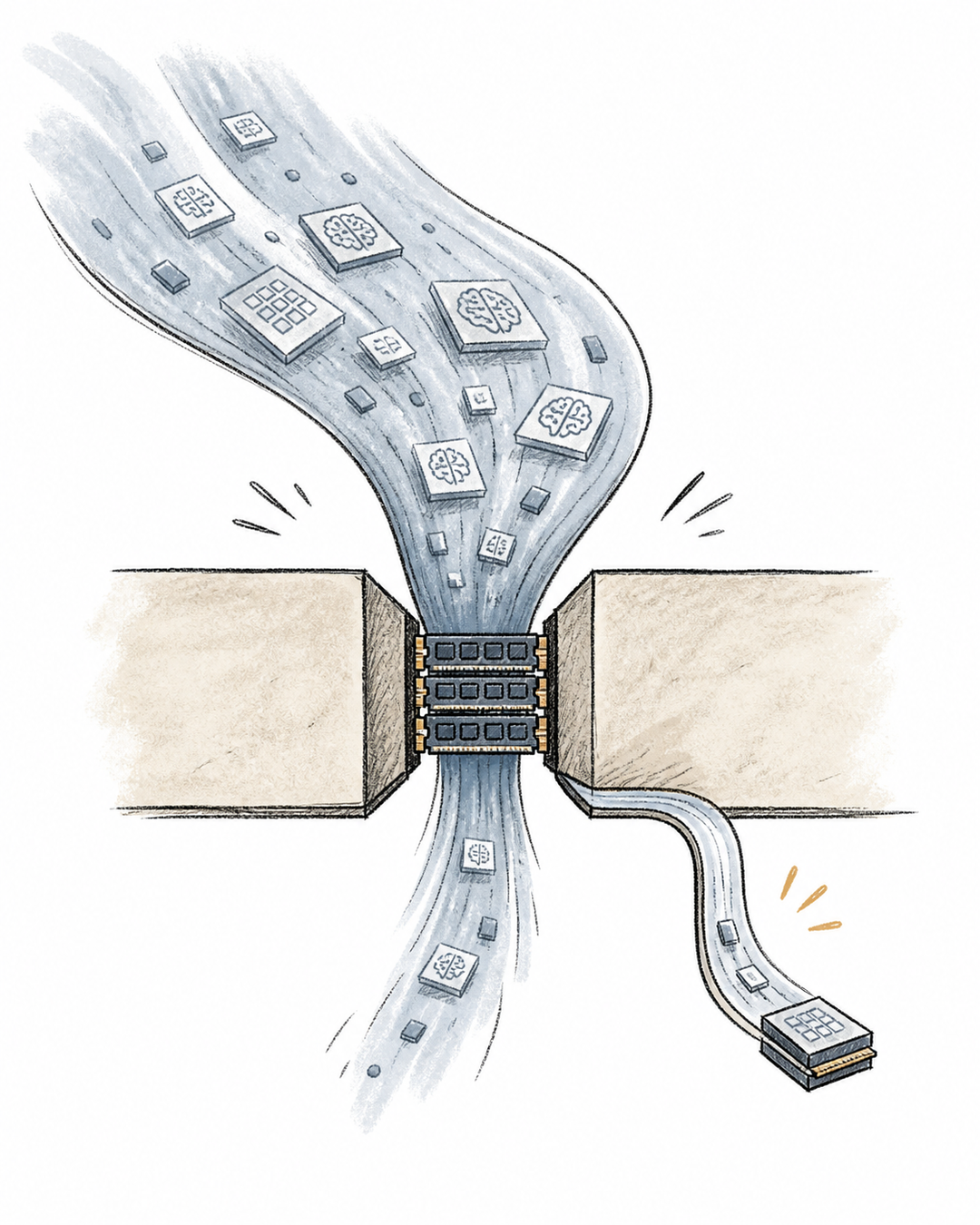
Nvidia is reportedly testing several versions of its Rubin Ultra GPU, with some alternatives using less HBM memory than originally planned. The move is intended to address supply-chain bottlenecks and reflects a broader shortage of high-end memory driven by surging artificial-intelligence demand. Pressure from data-center construction is expected to continue spreading downstream. People familiar with the matter said Nvidia has tested at least three Rubin Ultra GPU configurations with reduced HBM specifications over the past several weeks. Nvidia CEO Jensen Huang first unveiled Rubin Ultra at the company’s 2025 developer conference and said each GPU would be equipped with 1TB of HBM4e memory. Semiconductor research firm TrendForce said Nvidia has recently added three alternatives to its original plan for a 12-layer HBM4e configuration: 8-layer HBM4e, 12-layer HBM4 and 8-layer HBM4. TrendForce said the product’s final specifications have not yet been determined. TrendForce attributed the testing of the revised configurations to two factors. First, an industrywide DRAM shortage expected in 2027 could reduce wafer capacity available for HBM production. Second, uncertainty remains over the testing and acceptance schedule for 12-layer HBM4e, as well as finished-product yields during mass production. TrendForce also said that, because a shortage of LPDDR5X memory chips is expected to continue through 2027, Nvidia has decided to halve the capacity of the SOCAMM memory modules in its Vera Rubin superchip module. Industry observers said the situation is notable because strong demand for Nvidia’s AI chips is increasing memory consumption and worsening the supply shortage, while Nvidia itself is being constrained by that shortage and is having to adjust its memory configurations. Other AI hardware makers are also adjusting memory configurations based on supply conditions. TrendForce said several cloud-service providers are considering reducing the HBM capacity of their next-generation internally developed AI chips. TrendForce forecasts that total HBM bit shipments will grow 50% to 60% year over year in 2027, but said that increase will still be insufficient to meet market demand. As a result, the firm expects HBM suppliers to retain pricing power throughout 2027, leaving AI-chip makers to contend with both inadequate supply and rising costs. Reducing memory capacity could affect performance. Companies running large AI models may need to deploy more GPUs than originally planned if they use the lower-memory versions. Semiconductor industry research firm SemiAnalysis said Nvidia’s hardware savings from using less HBM memory would instead be directed toward switches and optical-interconnect components. SemiAnalysis said Nvidia is using hierarchical memory and optical interconnects to ease the pressure from high HBM prices and tight supply. The view is consistent with Huang’s earlier position that supply-chain bottlenecks can give upstream suppliers greater bargaining power while also forcing companies to develop new technologies to address the problem. Industry observers said Nvidia may partly offset the performance loss from lower memory capacity by increasing GPU computing power and optimizing interconnect bandwidth. Overall, however, system deployment costs and the complexity of building clusters are likely to rise. For large cloud providers such as Microsoft, Meta, Amazon and Google, which continue to increase their AI capital spending, the situation points to further upward pressure on future data-center construction costs.
People familiar with the matter said Nvidia has tested at least three Rubin Ultra GPU configurations with reduced HBM specifications over the past several weeks.
Nvidia CEO Jensen Huang first unveiled Rubin Ultra at the company’s 2025 developer conference and said each GPU would be equipped with 1TB of HBM4e memory.
Semiconductor research firm TrendForce said Nvidia has recently added three alternatives to its original plan for a 12-layer HBM4e configuration: 8-layer HBM4e, 12-layer HBM4 and 8-layer HBM4. TrendForce said the product’s final specifications have not yet been determined.
TrendForce attributed the testing of the revised configurations to two factors. First, an industrywide DRAM shortage expected in 2027 could reduce wafer capacity available for HBM production. Second, uncertainty remains over the testing and acceptance schedule for 12-layer HBM4e, as well as finished-product yields during mass production.
TrendForce also said that, because a shortage of LPDDR5X memory chips is expected to continue through 2027, Nvidia has decided to halve the capacity of the SOCAMM memory modules in its Vera Rubin superchip module.
Industry observers said the situation is notable because strong demand for Nvidia’s AI chips is increasing memory consumption and worsening the supply shortage, while Nvidia itself is being constrained by that shortage and is having to adjust its memory configurations.
Other AI hardware makers are also adjusting memory configurations based on supply conditions. TrendForce said several cloud-service providers are considering reducing the HBM capacity of their next-generation internally developed AI chips.
TrendForce forecasts that total HBM bit shipments will grow 50% to 60% year over year in 2027, but said that increase will still be insufficient to meet market demand. As a result, the firm expects HBM suppliers to retain pricing power throughout 2027, leaving AI-chip makers to contend with both inadequate supply and rising costs.
Reducing memory capacity could affect performance. Companies running large AI models may need to deploy more GPUs than originally planned if they use the lower-memory versions.
Semiconductor industry research firm SemiAnalysis said Nvidia’s hardware savings from using less HBM memory would instead be directed toward switches and optical-interconnect components.
SemiAnalysis said Nvidia is using hierarchical memory and optical interconnects to ease the pressure from high HBM prices and tight supply. The view is consistent with Huang’s earlier position that supply-chain bottlenecks can give upstream suppliers greater bargaining power while also forcing companies to develop new technologies to address the problem.
Industry observers said Nvidia may partly offset the performance loss from lower memory capacity by increasing GPU computing power and optimizing interconnect bandwidth. Overall, however, system deployment costs and the complexity of building clusters are likely to rise.
For large cloud providers such as Microsoft, Meta, Amazon and Google, which continue to increase their AI capital spending, the situation points to further upward pressure on future data-center construction costs.