Apple has mapped out three generations of foldable i Phone as 2026 share may top Huawei's
Apple has finalized a three-year roadmap for foldable iPhone updates, with the third-generation model potentially launching as early as 2028, according to technology journalist Mark Gurman in the latest edition of his Power On newsletter on Aug. 10. Gurman previously reported that Apple's first foldable iPhone is planned for a formal debut in fall 2026. The device is tentatively called the iPhone Ultra and is expected to use a book-style, inward-folding design. The first-generation model is expected to feature a 7.8-inch inner display and a 5.5-inch outer display. It would abandon Face ID in favor of Touch ID built into the device, use an A20 chip paired with Apple's in-house C2 modem, and emphasize an ultrathin design. The starting price could reach $2,000, or about 13,530 yuan, with some versions potentially priced higher. If the first generation is primarily intended to break new technological ground and test the market, the greater pressure to improve the user experience will fall on the next two generations. According to market information, the second-generation foldable iPhone is planned for 2027 and has already received internal project approval at Apple. Rather than making major changes to the basic screen sizes, the second generation is expected to focus on optimizing the hinge, reducing overall weight, improving battery life, further minimizing the visible crease, and refining iOS's foldable-device interaction ecosystem. These changes would address hardware and software shortcomings exposed by the first-generation model. The third-generation product, expected in 2028, could bring a major screen-related upgrade. Gurman said both the inner and outer displays would be slightly larger than those on the first two generations, but he did not disclose exact screen specifications. Counterpoint Research's latest forecast for the global foldable-smartphone market projects 2026 shipments to rise 21% year over year. The market is expected to continue expanding from 2025, driven by sustained consumer demand for premium large-screen foldables, intensifying competition among leading smartphone makers, and Apple's expected entry into the foldable-phone market. The research firm expects Samsung to remain the global foldable-smartphone market leader in 2026, with a projected 32% share. However, the market landscape is expected to differ significantly from 2025 as Apple enters the market and Huawei, particularly in China, maintains strong momentum. Counterpoint projects Apple will hold 25% of the market in 2026, compared with 24% for Huawei. Motorola and Honor are expected to follow with 8% and 3%, respectively. Against that backdrop, the foldable-phone display-panel market is expected to rebound from its 2025 adjustment period in 2026, with shipments projected to increase about 24% year over year and revenue about 48%. Growth would come not only from a recovery in unit shipments but also from Apple's entry and the higher-end product mix of large-screen foldables. Counterpoint's report projects full-year 2026 foldable-smartphone display-panel shipments of about 27.5 million units, up about 24% from 2025. Revenue is expected to reach about $4.4 billion, up about 48%. After a modest adjustment in 2025, foldable-smartphone display-panel shipments are expected to return to an expansion cycle in 2026. Before Apple's first foldable product officially reaches the market, Samsung's upcoming Galaxy Unpacked event is expected to be an important milestone for the category. Samsung is expected to introduce the Galaxy Z8 lineup, including the Galaxy Z8 Flip, Galaxy Z8 Fold and a model with a wider foldable display. That wider design is expected to be a major focus, potentially offering a more practical outer-screen experience and a larger inner display for multitasking, content consumption and AI-assisted productivity. As AI features expand from chat-based interactions into everyday workflows, wider foldable designs could become more valuable. Larger screens and more flexible interface layouts would benefit document summaries, content editing, schedule management and the movement of information across applications. Liz Lee, a vice president at Counterpoint Research, said 2026 would mark a new stage for the foldable-smartphone market. Apple's entry could raise consumer awareness of foldable products and lift the product benchmark for premium foldables, she said. Samsung, however, still has clear advantages in product maturity, distribution and the foldable-phone user experience. Android manufacturers have accumulated extensive experience over several generations with phone hinges, crease control, battery life and software optimization for split-screen use. Apple will need to catch up with mature rivals on the overall experience from its first-generation product. Manufacturing yields in the supply chain are another uncertainty hanging over the foldable iPhone. Producing foldable hinges and ultrathin UTG glass is considerably more difficult than manufacturing components for conventional slab phones. If yields fall short of expectations, supply schedules could be affected and hardware costs could rise further. Although the hardware roadmap extends to 2028, the iOS software ecosystem for foldable devices will also need continued refinement with each model generation. Multitasking and application support for larger displays will require long-term updates and optimization. In addition to product-development and supply-chain-yield challenges, rising costs for external components could put further pressure on the foldable iPhone's price. Apple Chief Executive Tim Cook said the company was evaluating all possible responses as memory-chip prices continue to rise. He described the current memory-price environment as a once-in-a-century flood and said prices had risen exponentially. Tarun Pathak, a research director at Counterpoint Research, said the smartphone industry would face a more difficult market environment in the second half of the year as storage prices are expected to continue rising for some time.
Gurman previously reported that Apple's first foldable iPhone is planned for a formal debut in fall 2026. The device is tentatively called the iPhone Ultra and is expected to use a book-style, inward-folding design.
The first-generation model is expected to feature a 7.8-inch inner display and a 5.5-inch outer display. It would abandon Face ID in favor of Touch ID built into the device, use an A20 chip paired with Apple's in-house C2 modem, and emphasize an ultrathin design.
The starting price could reach $2,000, or about 13,530 yuan, with some versions potentially priced higher.
If the first generation is primarily intended to break new technological ground and test the market, the greater pressure to improve the user experience will fall on the next two generations. According to market information, the second-generation foldable iPhone is planned for 2027 and has already received internal project approval at Apple. Rather than making major changes to the basic screen sizes, the second generation is expected to focus on optimizing the hinge, reducing overall weight, improving battery life, further minimizing the visible crease, and refining iOS's foldable-device interaction ecosystem. These changes would address hardware and software shortcomings exposed by the first-generation model.
The third-generation product, expected in 2028, could bring a major screen-related upgrade. Gurman said both the inner and outer displays would be slightly larger than those on the first two generations, but he did not disclose exact screen specifications.
Counterpoint Research's latest forecast for the global foldable-smartphone market projects 2026 shipments to rise 21% year over year. The market is expected to continue expanding from 2025, driven by sustained consumer demand for premium large-screen foldables, intensifying competition among leading smartphone makers, and Apple's expected entry into the foldable-phone market.
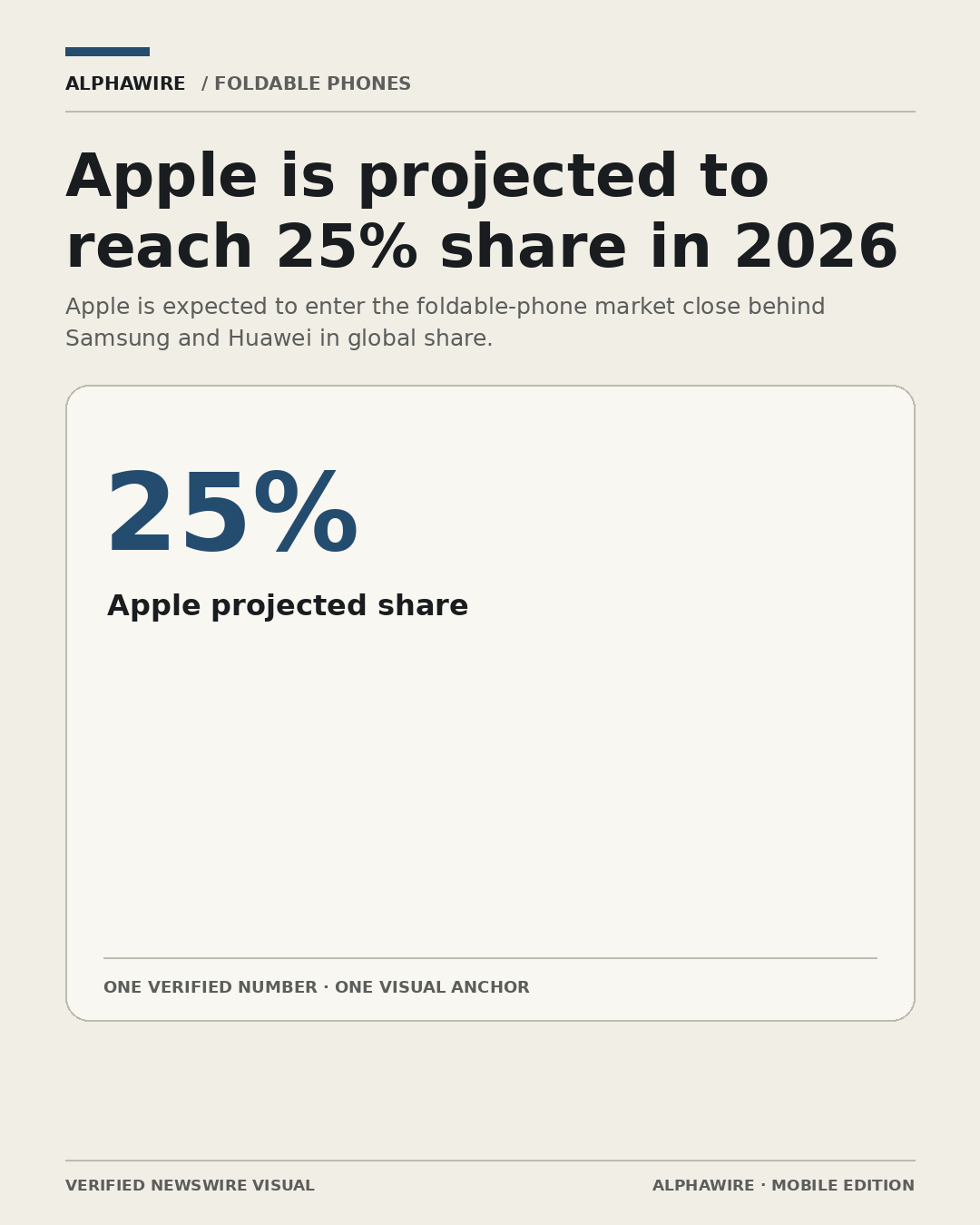
The research firm expects Samsung to remain the global foldable-smartphone market leader in 2026, with a projected 32% share. However, the market landscape is expected to differ significantly from 2025 as Apple enters the market and Huawei, particularly in China, maintains strong momentum. Counterpoint projects Apple will hold 25% of the market in 2026, compared with 24% for Huawei. Motorola and Honor are expected to follow with 8% and 3%, respectively.
Against that backdrop, the foldable-phone display-panel market is expected to rebound from its 2025 adjustment period in 2026, with shipments projected to increase about 24% year over year and revenue about 48%. Growth would come not only from a recovery in unit shipments but also from Apple's entry and the higher-end product mix of large-screen foldables.
Counterpoint's report projects full-year 2026 foldable-smartphone display-panel shipments of about 27.5 million units, up about 24% from 2025. Revenue is expected to reach about $4.4 billion, up about 48%. After a modest adjustment in 2025, foldable-smartphone display-panel shipments are expected to return to an expansion cycle in 2026.
Before Apple's first foldable product officially reaches the market, Samsung's upcoming Galaxy Unpacked event is expected to be an important milestone for the category. Samsung is expected to introduce the Galaxy Z8 lineup, including the Galaxy Z8 Flip, Galaxy Z8 Fold and a model with a wider foldable display. That wider design is expected to be a major focus, potentially offering a more practical outer-screen experience and a larger inner display for multitasking, content consumption and AI-assisted productivity.
As AI features expand from chat-based interactions into everyday workflows, wider foldable designs could become more valuable. Larger screens and more flexible interface layouts would benefit document summaries, content editing, schedule management and the movement of information across applications.
Liz Lee, a vice president at Counterpoint Research, said 2026 would mark a new stage for the foldable-smartphone market. Apple's entry could raise consumer awareness of foldable products and lift the product benchmark for premium foldables, she said. Samsung, however, still has clear advantages in product maturity, distribution and the foldable-phone user experience.
Android manufacturers have accumulated extensive experience over several generations with phone hinges, crease control, battery life and software optimization for split-screen use. Apple will need to catch up with mature rivals on the overall experience from its first-generation product.
Manufacturing yields in the supply chain are another uncertainty hanging over the foldable iPhone. Producing foldable hinges and ultrathin UTG glass is considerably more difficult than manufacturing components for conventional slab phones. If yields fall short of expectations, supply schedules could be affected and hardware costs could rise further.
Although the hardware roadmap extends to 2028, the iOS software ecosystem for foldable devices will also need continued refinement with each model generation. Multitasking and application support for larger displays will require long-term updates and optimization.
In addition to product-development and supply-chain-yield challenges, rising costs for external components could put further pressure on the foldable iPhone's price. Apple Chief Executive Tim Cook said the company was evaluating all possible responses as memory-chip prices continue to rise. He described the current memory-price environment as a once-in-a-century flood and said prices had risen exponentially.
Tarun Pathak, a research director at Counterpoint Research, said the smartphone industry would face a more difficult market environment in the second half of the year as storage prices are expected to continue rising for some time.