Barclays: Rising reliance on price-sensitive Treasury buyers may keep yields elevated
The composition of U.S. Treasury buyers is shifting toward value-conscious mutual funds, households and other private investors, a change that has helped push the 30-year Treasury yield to levels near multidecade highs, Barclays said. Strategists Demi Hu and Anshul Pradan wrote in a report that as long as inflation persists, these buyers will demand increasingly higher compensation to hold longer-term bonds. “The buyer base for U.S. Treasuries has changed,” the strategists said. Demand from official institutions, including foreign central banks and the Federal Reserve, has continued to weaken since the Fed began reducing its holdings in 2022, making “private investors the marginal buyers absorbing new supply.” Private investors now hold an estimated 73% of the U.S. Treasury market, up from about 50% roughly 10 years ago, they said. Barclays’ holdings-weighted composite elasticity index shows that “the U.S. Treasury market’s reliance on price-sensitive investors has increased significantly over the past 10 years.” Data show that since the 30-year Treasury yield moved above 5% earlier this year, it has remained above that level for 41 trading days through Tuesday. That is the longest such stretch since 2007, when the yield was above 5% for 50 trading days over the full year. Long-term yields have continued to rise as the Federal Reserve’s measure of long-term inflation has remained above its target for the past five years and the U.S. budget deficit has expanded since the pandemic in 2020. Investors are therefore demanding greater compensation, or a higher “term premium,” to hold long-term U.S. government debt. “As long-term Treasury yields return to multidecade highs, investors are increasingly focused on fiscal deficits, the supply of duration and inflation risk premia as drivers of higher long-term interest rates,” Hu and Pradan said. As mutual funds, foreign private investors, banks and households account for a larger share of Treasury buyers, the market will need to offer “structurally higher term premia,” the strategists said. “Unlike official buyers, whose demand is driven by policy objectives, private investors are generally more sensitive to expected returns when making asset-allocation decisions.”
Strategists Demi Hu and Anshul Pradan wrote in a report that as long as inflation persists, these buyers will demand increasingly higher compensation to hold longer-term bonds.
“The buyer base for U.S. Treasuries has changed,” the strategists said. Demand from official institutions, including foreign central banks and the Federal Reserve, has continued to weaken since the Fed began reducing its holdings in 2022, making “private investors the marginal buyers absorbing new supply.”
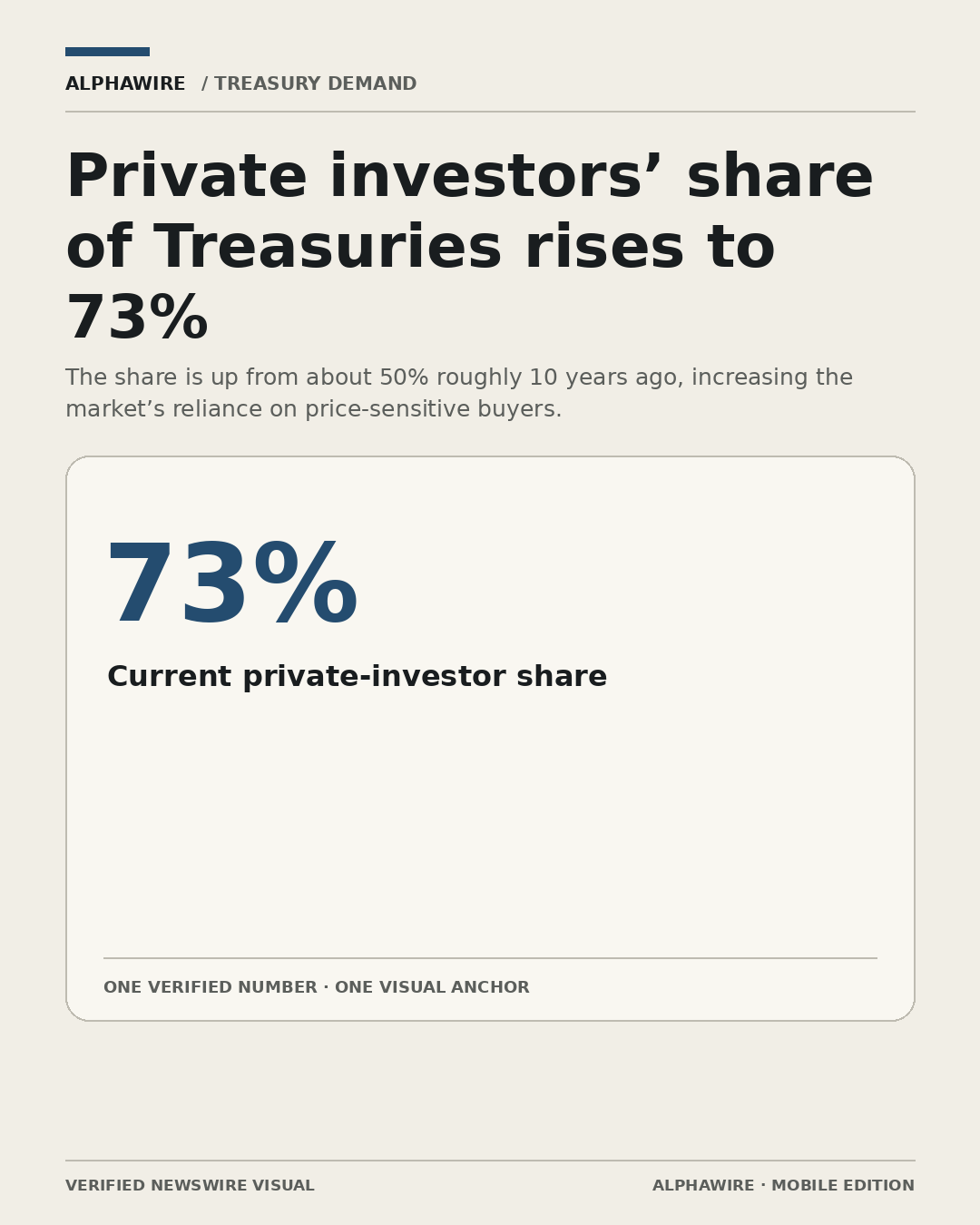
Private investors now hold an estimated 73% of the U.S. Treasury market, up from about 50% roughly 10 years ago, they said. Barclays’ holdings-weighted composite elasticity index shows that “the U.S. Treasury market’s reliance on price-sensitive investors has increased significantly over the past 10 years.”
Data show that since the 30-year Treasury yield moved above 5% earlier this year, it has remained above that level for 41 trading days through Tuesday. That is the longest such stretch since 2007, when the yield was above 5% for 50 trading days over the full year.
Long-term yields have continued to rise as the Federal Reserve’s measure of long-term inflation has remained above its target for the past five years and the U.S. budget deficit has expanded since the pandemic in 2020. Investors are therefore demanding greater compensation, or a higher “term premium,” to hold long-term U.S. government debt.
“As long-term Treasury yields return to multidecade highs, investors are increasingly focused on fiscal deficits, the supply of duration and inflation risk premia as drivers of higher long-term interest rates,” Hu and Pradan said.
As mutual funds, foreign private investors, banks and households account for a larger share of Treasury buyers, the market will need to offer “structurally higher term premia,” the strategists said. “Unlike official buyers, whose demand is driven by policy objectives, private investors are generally more sensitive to expected returns when making asset-allocation decisions.”