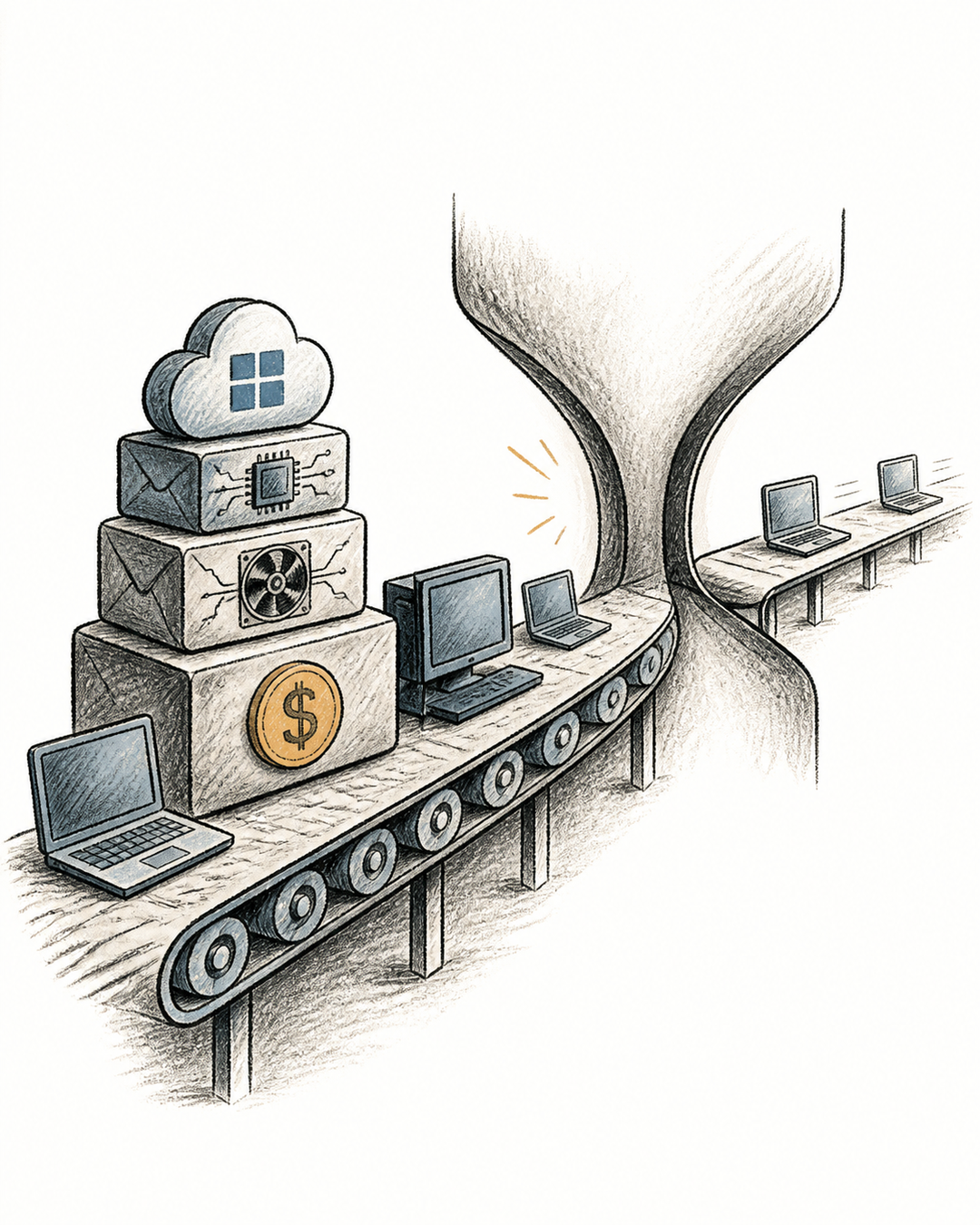
Microsoft reportedly raises Windows 11 licensing fees by up to 10%
The consumer electronics industry is facing another price increase. Microsoft is reportedly raising Windows 11 licensing fees by as much as 10%, according to reports. The increase does not apply to do-it-yourself users who build their own PCs; it applies to original equipment manufacturers that sell fully assembled computers to consumers. The global consumer electronics industry has struggled with pricing pressure this year. The immediate cause has been shortages of semiconductors, including memory and logic chips, which have pushed up prices for other related hardware as well. Microsoft typically adjusts licensing fees based on processor performance, with higher-end CPUs carrying higher fees. Overall, Windows licensing costs have a far smaller effect on PC prices than the surge in memory and solid-state-drive prices. Even so, the reported increase is another factor making computers more expensive than before. Personal computers face another blow A PC OEM industry source said Microsoft raises its licensing fees every year, but this year's increase is significantly larger than usual, at 7% to 10%. Windows 11 licenses are typically not the largest component of a laptop's cost, and the increase in licensing fees appears to have already been reflected in current prices. However, reports say ASUS and Acer plan to raise prices by about 5% later this year. Compared with the fourth quarter of 2025, ASUS products have already posted an average increase of 30%. PC shipments have also declined sharply in recent months. A report released in early July said global PC shipments fell 4.9% year over year in the second quarter of 2026. Major manufacturers including Lenovo, HP and Dell all saw their sales decline, while Apple was the only company to report shipment growth of more than 10%. Although continued price increases can improve corporate profits, consumers may become less inclined to buy new computers if the trend continues and moves closer to being out of control. That would be a nightmare for the industry as a whole.
The global consumer electronics industry has struggled with pricing pressure this year. The immediate cause has been shortages of semiconductors, including memory and logic chips, which have pushed up prices for other related hardware as well.
Microsoft typically adjusts licensing fees based on processor performance, with higher-end CPUs carrying higher fees. Overall, Windows licensing costs have a far smaller effect on PC prices than the surge in memory and solid-state-drive prices. Even so, the reported increase is another factor making computers more expensive than before.
Personal computers face another blow
A PC OEM industry source said Microsoft raises its licensing fees every year, but this year's increase is significantly larger than usual, at 7% to 10%.
Windows 11 licenses are typically not the largest component of a laptop's cost, and the increase in licensing fees appears to have already been reflected in current prices.
However, reports say ASUS and Acer plan to raise prices by about 5% later this year. Compared with the fourth quarter of 2025, ASUS products have already posted an average increase of 30%.
PC shipments have also declined sharply in recent months. A report released in early July said global PC shipments fell 4.9% year over year in the second quarter of 2026. Major manufacturers including Lenovo, HP and Dell all saw their sales decline, while Apple was the only company to report shipment growth of more than 10%.
Although continued price increases can improve corporate profits, consumers may become less inclined to buy new computers if the trend continues and moves closer to being out of control. That would be a nightmare for the industry as a whole.