Google launches Pixel 11 lineup with Gemini Intelligence at the center
Alphabet launched its new Pixel 11 smartphone lineup Wednesday, putting what it describes as its most agentic version of Gemini to date at the center of the devices, just weeks before an AI-model-driven, rebuilt Siri is expected to arrive. The lineup includes the Pixel 11, Pixel 11 Pro, Pixel 11 Pro XL and Pixel 11 Pro Fold. But Google’s hardware pitch also focuses heavily on Gemini Intelligence, a suite of artificial-intelligence features designed to understand what users are doing on their phones and take action across different apps. For example, Gemini Intelligence can connect information from messages, calendars, maps and other Google services, then suggest or carry out follow-up steps such as checking schedule availability, comparing travel options or starting a restaurant reservation. Google is also expanding AI capabilities that run directly within the phone’s operating system, without requiring users to open a separate chatbot. Rick Osterloh, Google’s head of devices, said the company believes AI could fundamentally change how people interact with smartphones. “Over the last 10 to 15 years, the way we’ve used laptops and phones hasn’t changed that much,” Osterloh said. “But we think that’s about to change dramatically.” He described Gemini Intelligence as “a whole new way of interacting with computers,” using agentic capabilities so users can “not only find information, but get things done.” The launch also puts Google in an unusual position: competing directly with one of its biggest AI customers. Apple is rebuilding Siri around Google’s Gemini models, with many of the same broad goals Google is now demonstrating on the Pixel: understanding personal information, recognizing what is happening on the screen and taking action across apps. Asked whether the Pixel gave Google an opportunity to demonstrate these capabilities before the model reaches iPhone users, Osterloh pushed back on the idea that the two experiences would be the same. “I think it’s clear that Pixel and iPhone are going in very different directions,” Osterloh said. “Leading with new technology, and especially leading with Gemini and AI, has been at the forefront of the Pixel product strategy.” Osterloh cited scam-detection features, Rambler voice transcription technology and deeper integration of Gemini into Android as capabilities that distinguish Google’s experience. “All of those features are unique to Android and Gemini Intelligence,” he said. “So I think those are all features that you’re going to want to buy a Pixel or an Android phone to experience.” The question facing both companies is whether increasingly capable AI will be enough to persuade consumers to buy new phones. Osterloh acknowledged that AI is not currently the top reason people upgrade their devices, but said its importance to consumers has risen sharply in recent years. Counterpoint Research said AI currently ranks roughly sixth or seventh among the reasons consumers upgrade their smartphones, but has moved up one or two places in recent surveys as Gemini and Apple Intelligence features have become more powerful. Taran Pathak, research director at Counterpoint, said compelling use cases and greater consumer awareness will be essential to turning rising interest into actual upgrades. He expects Apple Intelligence to become a catalyst for iPhone upgrades and noted that Apple already has more generative-AI smartphones in use than any other brand. Google ultimately expects Gemini to occupy a more central role in how people use their devices. “We think its importance will grow, and perhaps one day it will become the primary way people use their phones, laptops and other devices,” Osterloh said. Google is also dealing with another industrywide pressure: shortages of memory components that are driving up hardware costs. “Clearly, there is a shortage of memory, including RAM and flash memory,” Osterloh said. He said the pressure is forcing consumer-electronics companies to raise prices and suggested Google expects its own devices to face additional pressure. “I think what’s happening in the short term is that everybody is going to need to raise prices,” Osterloh said. “We’ve also discussed that we need to raise prices just like every other participant in the industry.”
The lineup includes the Pixel 11, Pixel 11 Pro, Pixel 11 Pro XL and Pixel 11 Pro Fold. But Google’s hardware pitch also focuses heavily on Gemini Intelligence, a suite of artificial-intelligence features designed to understand what users are doing on their phones and take action across different apps.
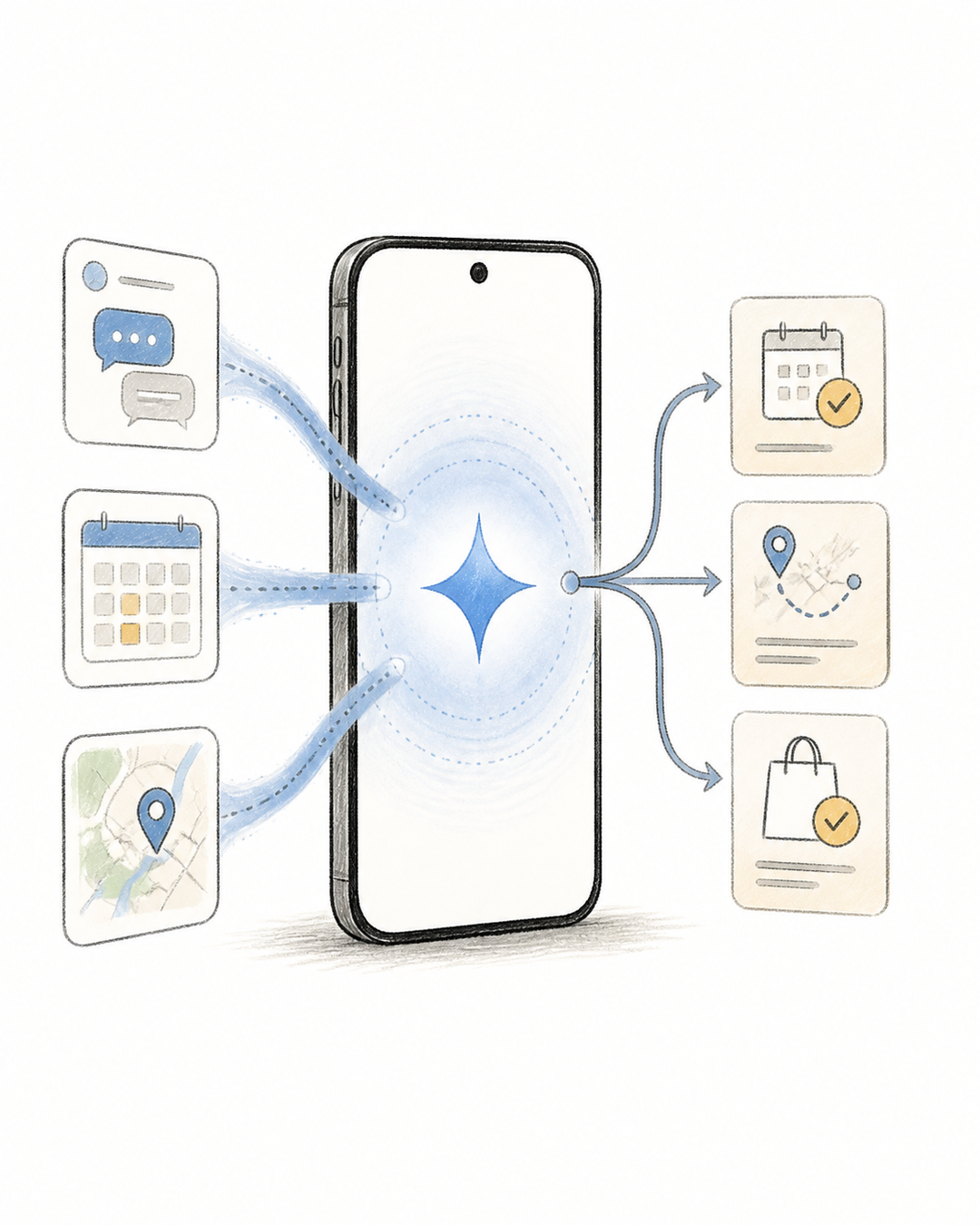
For example, Gemini Intelligence can connect information from messages, calendars, maps and other Google services, then suggest or carry out follow-up steps such as checking schedule availability, comparing travel options or starting a restaurant reservation. Google is also expanding AI capabilities that run directly within the phone’s operating system, without requiring users to open a separate chatbot.
Rick Osterloh, Google’s head of devices, said the company believes AI could fundamentally change how people interact with smartphones.
“Over the last 10 to 15 years, the way we’ve used laptops and phones hasn’t changed that much,” Osterloh said. “But we think that’s about to change dramatically.”
He described Gemini Intelligence as “a whole new way of interacting with computers,” using agentic capabilities so users can “not only find information, but get things done.”
The launch also puts Google in an unusual position: competing directly with one of its biggest AI customers.
Apple is rebuilding Siri around Google’s Gemini models, with many of the same broad goals Google is now demonstrating on the Pixel: understanding personal information, recognizing what is happening on the screen and taking action across apps.
Asked whether the Pixel gave Google an opportunity to demonstrate these capabilities before the model reaches iPhone users, Osterloh pushed back on the idea that the two experiences would be the same.
“I think it’s clear that Pixel and iPhone are going in very different directions,” Osterloh said. “Leading with new technology, and especially leading with Gemini and AI, has been at the forefront of the Pixel product strategy.”
Osterloh cited scam-detection features, Rambler voice transcription technology and deeper integration of Gemini into Android as capabilities that distinguish Google’s experience.
“All of those features are unique to Android and Gemini Intelligence,” he said. “So I think those are all features that you’re going to want to buy a Pixel or an Android phone to experience.”
The question facing both companies is whether increasingly capable AI will be enough to persuade consumers to buy new phones.
Osterloh acknowledged that AI is not currently the top reason people upgrade their devices, but said its importance to consumers has risen sharply in recent years.
Counterpoint Research said AI currently ranks roughly sixth or seventh among the reasons consumers upgrade their smartphones, but has moved up one or two places in recent surveys as Gemini and Apple Intelligence features have become more powerful.
Taran Pathak, research director at Counterpoint, said compelling use cases and greater consumer awareness will be essential to turning rising interest into actual upgrades. He expects Apple Intelligence to become a catalyst for iPhone upgrades and noted that Apple already has more generative-AI smartphones in use than any other brand.
Google ultimately expects Gemini to occupy a more central role in how people use their devices.
“We think its importance will grow, and perhaps one day it will become the primary way people use their phones, laptops and other devices,” Osterloh said.
Google is also dealing with another industrywide pressure: shortages of memory components that are driving up hardware costs.
“Clearly, there is a shortage of memory, including RAM and flash memory,” Osterloh said.
He said the pressure is forcing consumer-electronics companies to raise prices and suggested Google expects its own devices to face additional pressure.
“I think what’s happening in the short term is that everybody is going to need to raise prices,” Osterloh said. “We’ve also discussed that we need to raise prices just like every other participant in the industry.”