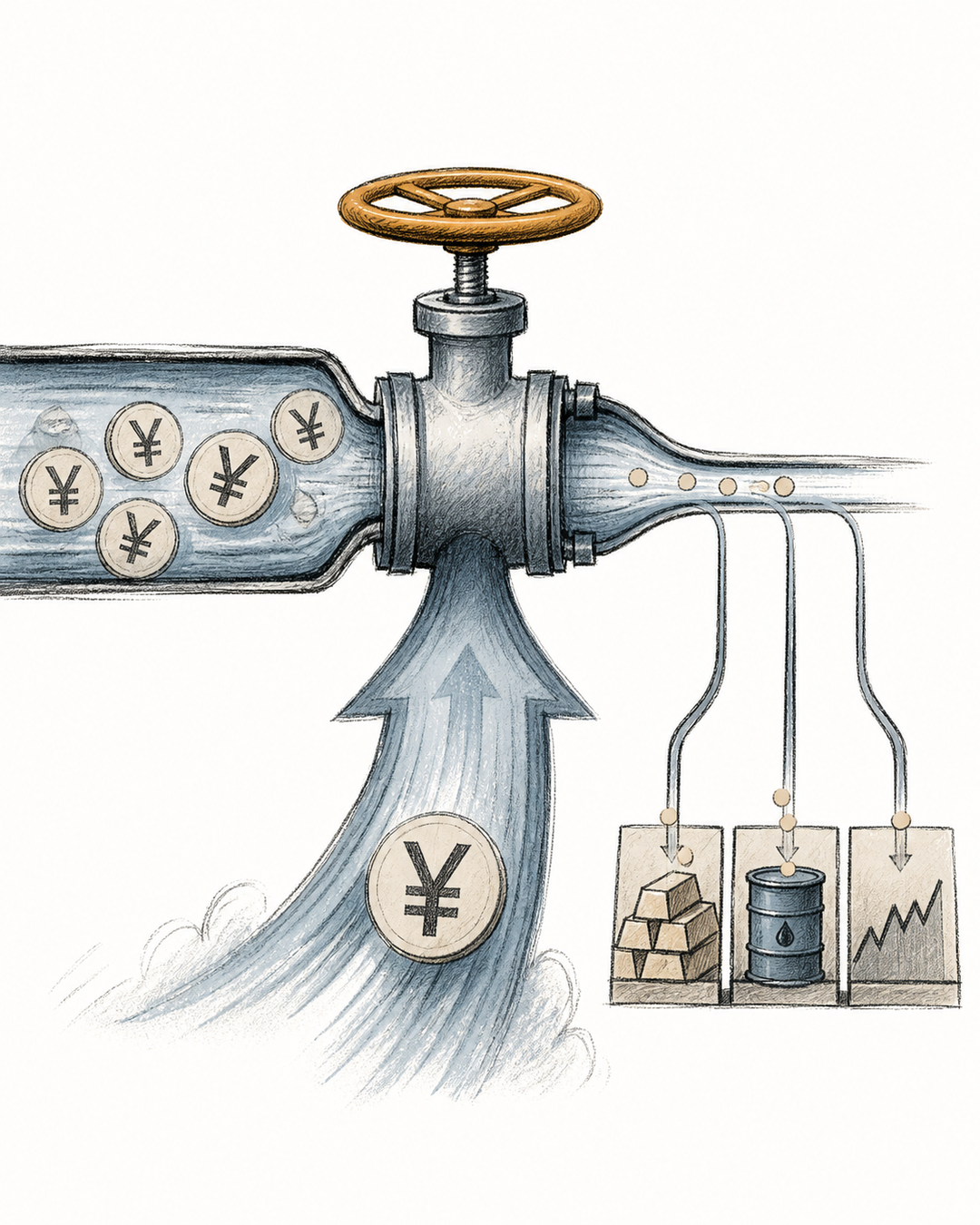
Yen surges as reported Japanese rate-hike support rattles commodities and stocks
The yen surged Thursday after Bloomberg reported that Japanese Prime Minister Sanae Takaichi supports the Bank of Japan raising interest rates in the near term, with the next move potentially coming in September or October, according to market participants. The dollar-yen exchange rate briefly plunged by more than 214 points during the afternoon session. Gold, silver and other commodities also sold off broadly, while gains in Japanese and South Korean stocks narrowed. The market moves may be linked to the Japanese government’s stance toward a BOJ rate increase. Japan’s government is reportedly supporting a faster BOJ hiking cycle. It wants to increase the effectiveness of recent joint U.S.-Japan intervention in the foreign-exchange market. If the report is accurate, a BOJ rate increase as early as next month would be viewed as highly likely. The developments have raised fresh concerns about Japan. The previous night, U.S. inflation data reduced the probability of a Federal Reserve rate increase, although the U.S. Dollar Index still turned higher. Japanese government bond futures fell 9 basis points to 126.48. The interaction between the bond and currency markets often signals a potential change in monetary policy. The BOJ is concerned that a weak yen is pushing up prices, while the Japanese government wants to strengthen the impact of recent joint foreign-exchange intervention with the United States. Those considerations have brought the government and central bank closer together on the need for a near-term rate increase. The prime minister’s office says specific monetary-policy measures, including rate hikes, should be decided by the BOJ, but that the central bank should work closely with the government to achieve the 2% inflation target in a “stable manner.” Japan’s producer price index rose 7.2% year over year in July and remained elevated. Oil, chemicals and nonferrous metals all recorded increases. The yen’s decline to a 40-year low has intensified imported inflation, while “inflation-driven bankruptcies” in the first half of the year reached a record high for the same period. The combination of corporate cost pressures, rising wages and yen depreciation is reinforcing inflationary pressure. BOJ Governor Kazuo Ueda had previously signaled the possibility of a September rate increase, suggesting that monetary-policy normalization could accelerate. Commodities also reacted noticeably from midday onward, with major products including gold and silver falling sharply across the board. Analysts say a short-term liquidity shock from a Japanese rate increase is a real possibility. As a major global funding currency, the yen could trigger a large-scale unwinding of carry trades if its interest rates rise. That could lead leveraged funds to withdraw from risk assets, including industrial metals such as copper and aluminum, causing a temporary price correction. The yen’s rapid strengthening in 2024 was accompanied by simultaneous pressure on the Nasdaq and commodities. From a U.S.-dollar perspective, however, a stronger yen could weaken the dollar and instead benefit nonferrous metals. ### Japan’s “Truss moment”? The yen’s sharp depreciation in recent weeks prompted an unusual joint intervention in the foreign-exchange market by U.S. and Japanese authorities. Campbell, head of DoubleLine Capital’s global sovereign and emerging-markets team, said the intervention was only a “treatment of the symptoms, not the root cause.” Japan’s fundamental problem, he said, was a major loosening of fiscal policy. Campbell also said Japan’s current predicament directly resembles the sovereign-debt crisis triggered by former British Prime Minister Liz Truss in 2022. He warned that, in an inflationary environment, policy mistakes could prompt faster and more severe market punishment, with risks potentially spreading to other developed markets. According to BigGoFinance, Campbell made the comments on the latest episode of DoubleLine’s Perspectives program. He said the intervention was a coordinated action by U.S. and Japanese authorities and that its timing was highly precise. U.S. Treasury Secretary Scott Bessent moved quickly, he said, because of concern that Japan might be forced to sell U.S. Treasuries to buy back yen, transmitting selling pressure directly to the Treasury market and pushing up U.S. borrowing costs. To avoid that outcome, the Federal Reserve provided a repurchase mechanism that allowed Japan to use its holdings of U.S. Treasuries as collateral to obtain dollars, rather than selling the securities directly in the open market. Campbell said that arrangement was only a temporary measure. Japan’s large debt burden continues to grow, and the sustainability of its fiscal outlook remains in doubt. The yen’s depreciation and rising Japanese government bond yields are, in essence, a vote of no confidence from the market in Japan’s fiscal policy. During decades of low inflation and even deflation, markets were relatively tolerant of fiscal expansion. But as prices continue to rise, investors will no longer tolerate irresponsible fiscal policy, and the punishment can come quickly and harshly, Campbell said. He added that fixed-income investors can no longer treat such developments as isolated, single-country events. Fiscal and monetary policies in developed markets are becoming increasingly interconnected, requiring investors to monitor international developments rather than focus only on every move by the Federal Reserve. What is happening in Japan today could become a shared concern tomorrow for bond markets in the United States, Europe and around the world.
The dollar-yen exchange rate briefly plunged by more than 214 points during the afternoon session. Gold, silver and other commodities also sold off broadly, while gains in Japanese and South Korean stocks narrowed. The market moves may be linked to the Japanese government’s stance toward a BOJ rate increase.
Japan’s government is reportedly supporting a faster BOJ hiking cycle. It wants to increase the effectiveness of recent joint U.S.-Japan intervention in the foreign-exchange market. If the report is accurate, a BOJ rate increase as early as next month would be viewed as highly likely.
The developments have raised fresh concerns about Japan. The previous night, U.S. inflation data reduced the probability of a Federal Reserve rate increase, although the U.S. Dollar Index still turned higher. Japanese government bond futures fell 9 basis points to 126.48. The interaction between the bond and currency markets often signals a potential change in monetary policy.
The BOJ is concerned that a weak yen is pushing up prices, while the Japanese government wants to strengthen the impact of recent joint foreign-exchange intervention with the United States. Those considerations have brought the government and central bank closer together on the need for a near-term rate increase. The prime minister’s office says specific monetary-policy measures, including rate hikes, should be decided by the BOJ, but that the central bank should work closely with the government to achieve the 2% inflation target in a “stable manner.”
Japan’s producer price index rose 7.2% year over year in July and remained elevated. Oil, chemicals and nonferrous metals all recorded increases. The yen’s decline to a 40-year low has intensified imported inflation, while “inflation-driven bankruptcies” in the first half of the year reached a record high for the same period. The combination of corporate cost pressures, rising wages and yen depreciation is reinforcing inflationary pressure. BOJ Governor Kazuo Ueda had previously signaled the possibility of a September rate increase, suggesting that monetary-policy normalization could accelerate.
Commodities also reacted noticeably from midday onward, with major products including gold and silver falling sharply across the board.
Analysts say a short-term liquidity shock from a Japanese rate increase is a real possibility. As a major global funding currency, the yen could trigger a large-scale unwinding of carry trades if its interest rates rise. That could lead leveraged funds to withdraw from risk assets, including industrial metals such as copper and aluminum, causing a temporary price correction. The yen’s rapid strengthening in 2024 was accompanied by simultaneous pressure on the Nasdaq and commodities. From a U.S.-dollar perspective, however, a stronger yen could weaken the dollar and instead benefit nonferrous metals.
### Japan’s “Truss moment”?
The yen’s sharp depreciation in recent weeks prompted an unusual joint intervention in the foreign-exchange market by U.S. and Japanese authorities. Campbell, head of DoubleLine Capital’s global sovereign and emerging-markets team, said the intervention was only a “treatment of the symptoms, not the root cause.” Japan’s fundamental problem, he said, was a major loosening of fiscal policy.
Campbell also said Japan’s current predicament directly resembles the sovereign-debt crisis triggered by former British Prime Minister Liz Truss in 2022. He warned that, in an inflationary environment, policy mistakes could prompt faster and more severe market punishment, with risks potentially spreading to other developed markets.
According to BigGoFinance, Campbell made the comments on the latest episode of DoubleLine’s Perspectives program. He said the intervention was a coordinated action by U.S. and Japanese authorities and that its timing was highly precise. U.S. Treasury Secretary Scott Bessent moved quickly, he said, because of concern that Japan might be forced to sell U.S. Treasuries to buy back yen, transmitting selling pressure directly to the Treasury market and pushing up U.S. borrowing costs.
To avoid that outcome, the Federal Reserve provided a repurchase mechanism that allowed Japan to use its holdings of U.S. Treasuries as collateral to obtain dollars, rather than selling the securities directly in the open market.
Campbell said that arrangement was only a temporary measure. Japan’s large debt burden continues to grow, and the sustainability of its fiscal outlook remains in doubt. The yen’s depreciation and rising Japanese government bond yields are, in essence, a vote of no confidence from the market in Japan’s fiscal policy.
During decades of low inflation and even deflation, markets were relatively tolerant of fiscal expansion. But as prices continue to rise, investors will no longer tolerate irresponsible fiscal policy, and the punishment can come quickly and harshly, Campbell said.
He added that fixed-income investors can no longer treat such developments as isolated, single-country events. Fiscal and monetary policies in developed markets are becoming increasingly interconnected, requiring investors to monitor international developments rather than focus only on every move by the Federal Reserve. What is happening in Japan today could become a shared concern tomorrow for bond markets in the United States, Europe and around the world.