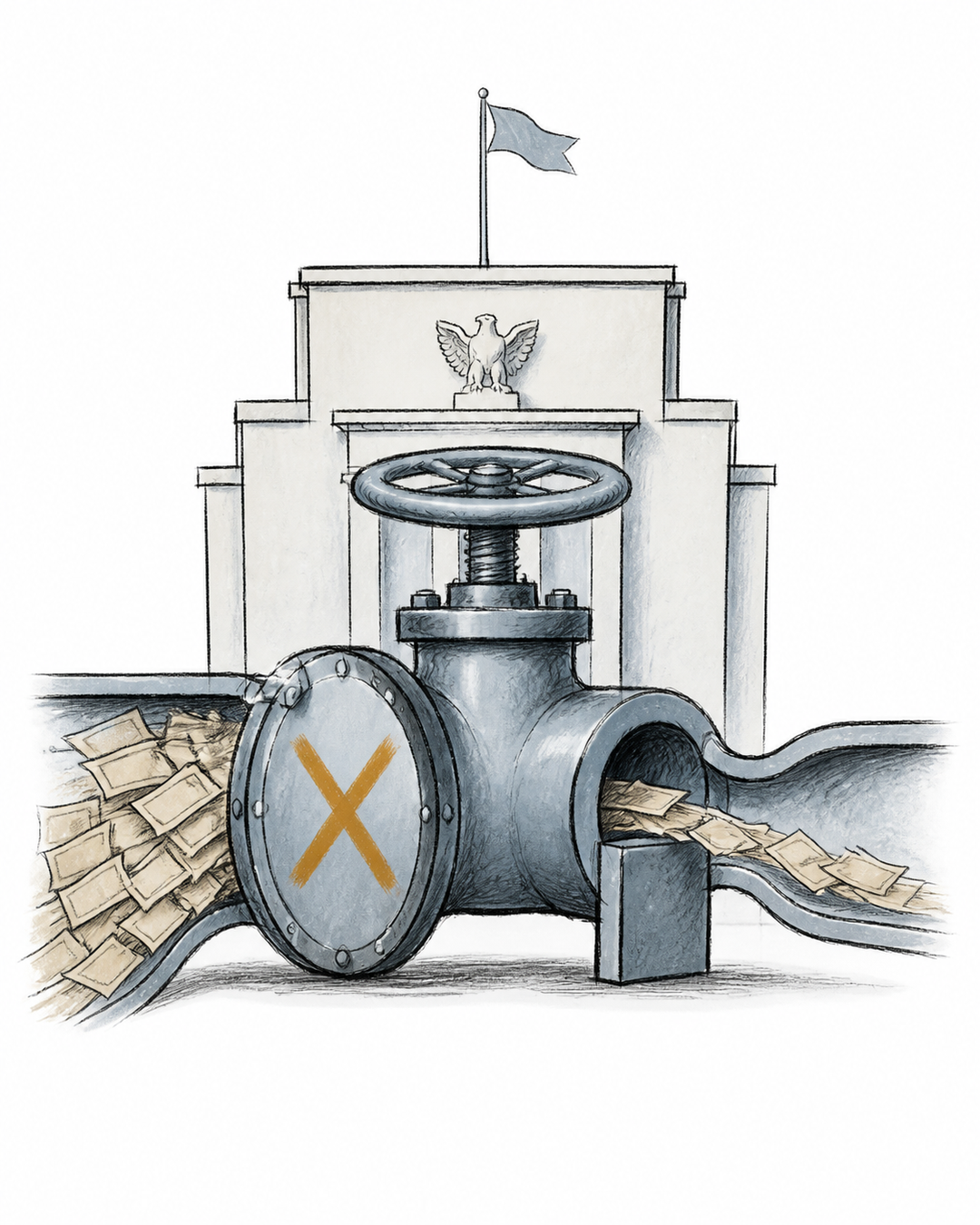
Fed to pause reserve-management Treasury-bill purchases for the next month
The Federal Reserve said Thursday that it would not buy U.S. Treasury bills for reserve-management purposes over the coming period, indicating that policymakers believe bank reserves in the financial system are at an appropriate level. According to the Federal Reserve Bank of New York’s website, the New York Fed’s Open Market Trading Desk does not plan to conduct reserve-management purchases during the monthly operating period ending Sept. 14. It still plans to make about $17 billion in reinvestment purchases during that period. The pause indicates that monetary policymakers remain confident funding markets can operate smoothly, even though higher government cash balances could drain liquidity from the market. Market performance supports that view. The Secured Overnight Financing Rate, or SOFR, was below the interest rate on reserve balances, or IORB, for most of July. As of Aug. 12, SOFR was fixed at 3.62%, or 3 basis points below IORB. The adjustment does not signal a change in monetary policy or the Federal Reserve’s balance-sheet strategy. “Given that short-term rates remain soft, the Fed’s complete halt to purchases for the first time since it launched RMP in December 2025 should be viewed as a temporary pause,” said Gennadiy Goldberg, head of U.S. rates strategy at TD Securities. “It is important to note that this should not be viewed as the first step toward restarting quantitative tightening.” In June, the Federal Open Market Committee modified its policy-implementation statement to make clear that it could pause RMP if money-market conditions required it, reflecting the Fed’s flexibility in determining the size of future purchases. The Fed abruptly stopped shrinking its balance sheet at the end of 2025 and shifted to buying short-term U.S. Treasuries maturing within one year, thereby injecting reserves back into the financial system. As of Aug. 5, bank reserves stood at $3 trillion, up from $2.85 trillion at the end of last year.
According to the Federal Reserve Bank of New York’s website, the New York Fed’s Open Market Trading Desk does not plan to conduct reserve-management purchases during the monthly operating period ending Sept. 14. It still plans to make about $17 billion in reinvestment purchases during that period.
The pause indicates that monetary policymakers remain confident funding markets can operate smoothly, even though higher government cash balances could drain liquidity from the market.
Market performance supports that view. The Secured Overnight Financing Rate, or SOFR, was below the interest rate on reserve balances, or IORB, for most of July. As of Aug. 12, SOFR was fixed at 3.62%, or 3 basis points below IORB.
The adjustment does not signal a change in monetary policy or the Federal Reserve’s balance-sheet strategy.
“Given that short-term rates remain soft, the Fed’s complete halt to purchases for the first time since it launched RMP in December 2025 should be viewed as a temporary pause,” said Gennadiy Goldberg, head of U.S. rates strategy at TD Securities. “It is important to note that this should not be viewed as the first step toward restarting quantitative tightening.”
In June, the Federal Open Market Committee modified its policy-implementation statement to make clear that it could pause RMP if money-market conditions required it, reflecting the Fed’s flexibility in determining the size of future purchases.
The Fed abruptly stopped shrinking its balance sheet at the end of 2025 and shifted to buying short-term U.S. Treasuries maturing within one year, thereby injecting reserves back into the financial system.
As of Aug. 5, bank reserves stood at $3 trillion, up from $2.85 trillion at the end of last year.