SK Hynix chairman warns of worst memory shortage next year as AI demand nears double
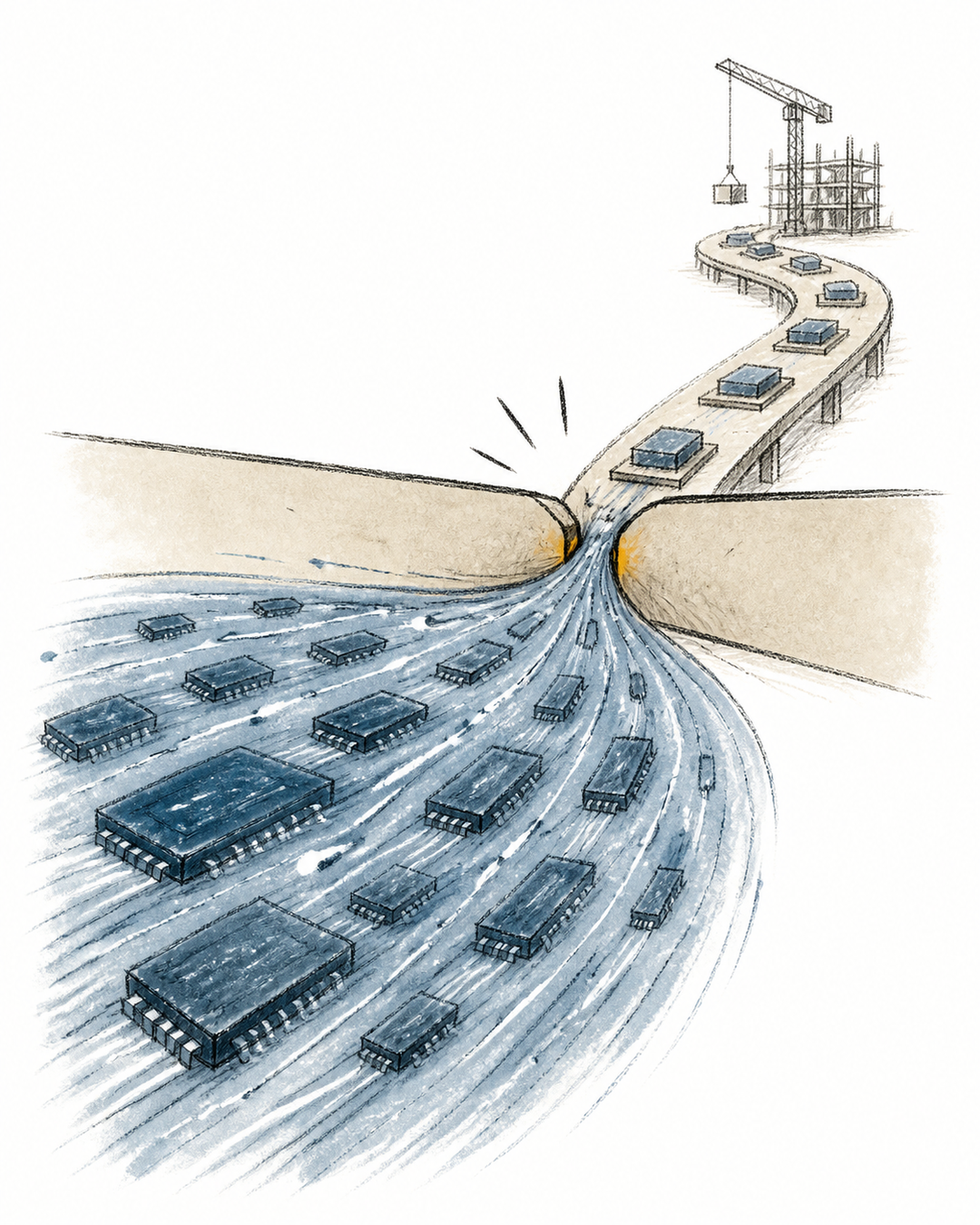
SK Hynix Chairman Choi Tae-won said the memory industry could face its worst shortage ever next year, as AI customers seek nearly twice their previous supply volumes. Choi spoke to the media Thursday at SK Hynix’s South Korean headquarters. He said demand from the AI ecosystem has already exceeded the company’s supply capacity. “Demand is explosive,” Choi said. “All of my customers are asking for supply volumes close to twice what they previously requested.” Expanding capacity could take four to five years, he said, describing the race among companies for memory chips as “like a war.” Without enough memory, customers “cannot produce AI computing equipment and AI chips.” As demand for AI servers continues to surge, high-bandwidth memory, or HBM, remains in short supply. Several technology giants have even traveled to South Korea early to sign long-term agreements, Choi said. He warned that next year could bring the most severe memory shortage in history. Choi compared the current state of AI to a 4-year-old child, saying memory demand will rise substantially as the industry matures. He also predicted that the use of AI agents could increase 77 times within five years. Choi rejects concerns about overreliance on NVIDIA Choi said NVIDIA is indispensable to the construction of AI infrastructure. “Without NVIDIA, the AI ecosystem would not exist,” he said. He praised NVIDIA CEO Jensen Huang for building the AI ecosystem with a broad group of partners rather than operating alone, calling that approach the key to success. Choi acknowledged that NVIDIA is currently SK Hynix’s “most important customer,” but rejected the view that SK Hynix depends on a single buyer. “It is currently the company’s most important customer,” Choi said, adding, “I still believe they will continue to be dominant in the future.” Responding to market concerns that SK Hynix is highly dependent on NVIDIA, Choi said the company also supplies Google, Microsoft and other hyperscale cloud-service providers. “We are not really dependent on just one customer; we simply want to serve the largest customers in the world today,” he said. In Choi’s view, NVIDIA’s dominance is driving demand for SK Hynix’s memory chips rather than creating customer-concentration risk. NVIDIA also depends on SK Hynix because its AI systems require the company’s HBM. Jim Cramer, a prominent financial television host, recently said bluntly that the technology industry has been “throttled by SK Hynix.” On Friday, SK Hynix shares rose sharply in South Korea. As of publication, the stock was up 2.64% at 1.635 million won. Despite a sharp pullback last month, the shares had still gained nearly fivefold over the past year, driven by the AI boom.
Choi spoke to the media Thursday at SK Hynix’s South Korean headquarters. He said demand from the AI ecosystem has already exceeded the company’s supply capacity.
“Demand is explosive,” Choi said. “All of my customers are asking for supply volumes close to twice what they previously requested.”
Expanding capacity could take four to five years, he said, describing the race among companies for memory chips as “like a war.” Without enough memory, customers “cannot produce AI computing equipment and AI chips.”
As demand for AI servers continues to surge, high-bandwidth memory, or HBM, remains in short supply. Several technology giants have even traveled to South Korea early to sign long-term agreements, Choi said. He warned that next year could bring the most severe memory shortage in history.
Choi compared the current state of AI to a 4-year-old child, saying memory demand will rise substantially as the industry matures. He also predicted that the use of AI agents could increase 77 times within five years.
Choi rejects concerns about overreliance on NVIDIA
Choi said NVIDIA is indispensable to the construction of AI infrastructure. “Without NVIDIA, the AI ecosystem would not exist,” he said.
He praised NVIDIA CEO Jensen Huang for building the AI ecosystem with a broad group of partners rather than operating alone, calling that approach the key to success.
Choi acknowledged that NVIDIA is currently SK Hynix’s “most important customer,” but rejected the view that SK Hynix depends on a single buyer.
“It is currently the company’s most important customer,” Choi said, adding, “I still believe they will continue to be dominant in the future.”
Responding to market concerns that SK Hynix is highly dependent on NVIDIA, Choi said the company also supplies Google, Microsoft and other hyperscale cloud-service providers.
“We are not really dependent on just one customer; we simply want to serve the largest customers in the world today,” he said.
In Choi’s view, NVIDIA’s dominance is driving demand for SK Hynix’s memory chips rather than creating customer-concentration risk. NVIDIA also depends on SK Hynix because its AI systems require the company’s HBM. Jim Cramer, a prominent financial television host, recently said bluntly that the technology industry has been “throttled by SK Hynix.”
On Friday, SK Hynix shares rose sharply in South Korea. As of publication, the stock was up 2.64% at 1.635 million won. Despite a sharp pullback last month, the shares had still gained nearly fivefold over the past year, driven by the AI boom.