Could Musk Gain Up to $824 Billion Through a Tesla-Space X Deal?
Wall Street is debating how Elon Musk could gain up to $824 billion in wealth through a merger between Tesla and SpaceX. The latest episode of the podcast TBPN said Musk could receive as many as 423 million Tesla shares in up to 12 installments under a compensation package approved by Tesla shareholders in November 2025. The awards would depend on Tesla, under Musk's leadership, reaching specified market-capitalization targets and operating milestones. The operating targets include delivering 20 million vehicles, reaching 10 million active Full Self-Driving, or FSD, subscribers, producing 1 million Optimus robots and putting 1 million autonomous taxis into commercial operation. The market-capitalization target is $8.5 trillion. Tesla shares rose about 4% on Thursday to nearly $340, giving the company a market value of $1.34 trillion. That remains far below the market-capitalization target required for Musk to receive the full award. TBPN said a change in control of Tesla would cause the operating targets under the compensation package to be treated as achieved. Rather than spending the next 10 years working to meet more than a dozen separate operating targets, the podcast said, Tesla could declare those targets achieved through a sufficiently expensive acquisition. Rumors that Tesla and SpaceX, another company controlled by Musk, could merge have intensified in recent months, and Musk has hinted at the possibility. Any merger or acquisition, however, would require approval from the shareholder meetings of both Tesla and SpaceX. Wall Street analysts are nearly unanimous that SpaceX would be the buyer if Tesla were acquired, but they disagree about the transaction structure and ownership split. RBC Capital Markets estimates that the combined entity would be valued at $3.31 trillion, with Tesla shareholders holding 54% of the shares. Other analysts have said Tesla shareholders could receive a 20% to 30% premium if the deal were structured as an all-stock transaction. Others are skeptical of such an acquisition. Gary Black of Future Fund said SpaceX could not afford to acquire Tesla because the transaction would significantly dilute SpaceX shareholders. In addition, investors have become increasingly negative on Tesla's autonomous-driving business, weakening the company's investment appeal. TBPN also said that, as of June 17, 2026, Musk held a 19.9% stake in Tesla. Because his ownership stake in SpaceX is higher, Musk could benefit both from acquiring Tesla at a very low price and from profiting when Tesla's equity appreciates. That could strengthen his incentive to pursue a merger.
The latest episode of the podcast TBPN said Musk could receive as many as 423 million Tesla shares in up to 12 installments under a compensation package approved by Tesla shareholders in November 2025. The awards would depend on Tesla, under Musk's leadership, reaching specified market-capitalization targets and operating milestones.
The operating targets include delivering 20 million vehicles, reaching 10 million active Full Self-Driving, or FSD, subscribers, producing 1 million Optimus robots and putting 1 million autonomous taxis into commercial operation. The market-capitalization target is $8.5 trillion.
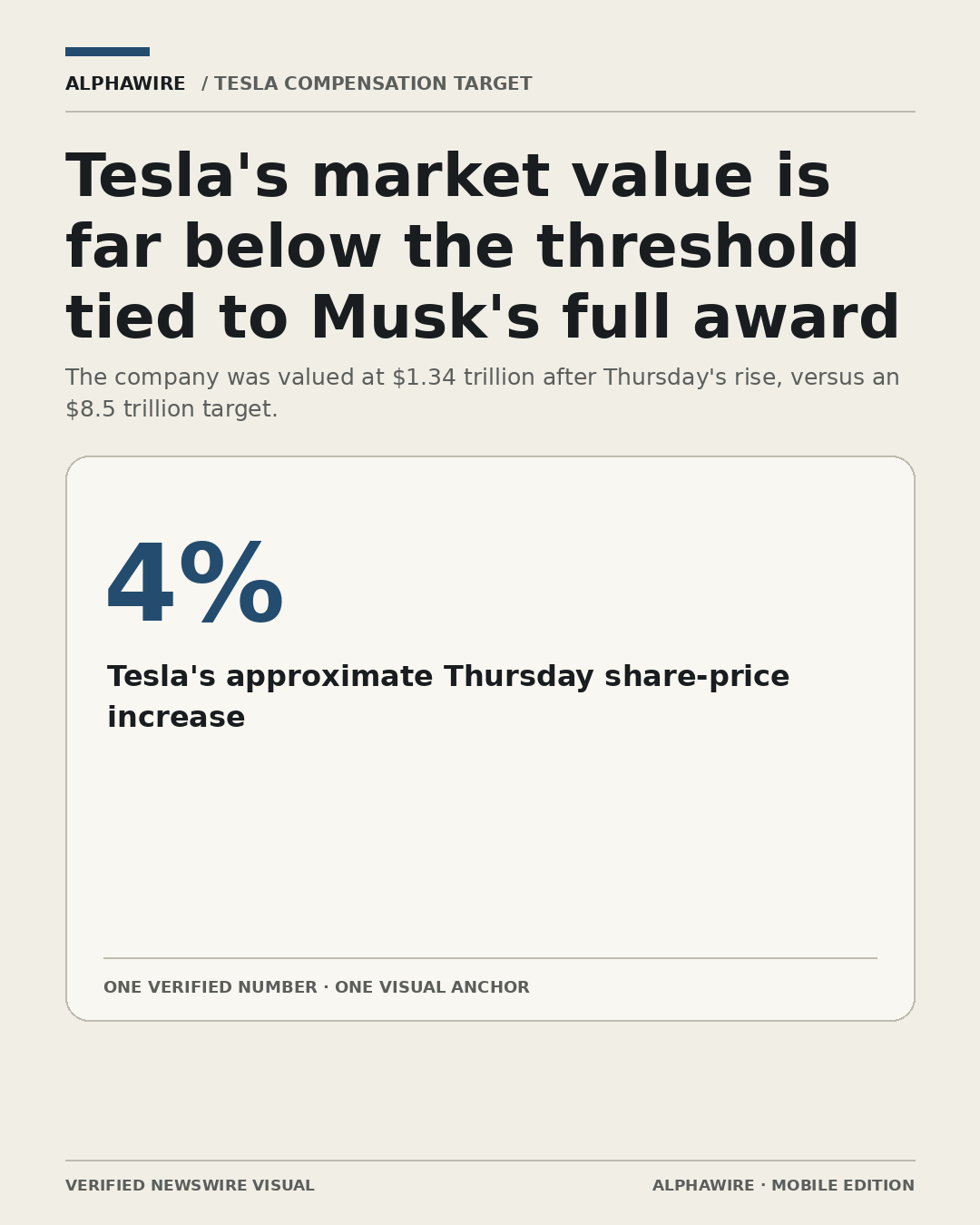
Tesla shares rose about 4% on Thursday to nearly $340, giving the company a market value of $1.34 trillion. That remains far below the market-capitalization target required for Musk to receive the full award.
TBPN said a change in control of Tesla would cause the operating targets under the compensation package to be treated as achieved. Rather than spending the next 10 years working to meet more than a dozen separate operating targets, the podcast said, Tesla could declare those targets achieved through a sufficiently expensive acquisition.
Rumors that Tesla and SpaceX, another company controlled by Musk, could merge have intensified in recent months, and Musk has hinted at the possibility. Any merger or acquisition, however, would require approval from the shareholder meetings of both Tesla and SpaceX.
Wall Street analysts are nearly unanimous that SpaceX would be the buyer if Tesla were acquired, but they disagree about the transaction structure and ownership split.
RBC Capital Markets estimates that the combined entity would be valued at $3.31 trillion, with Tesla shareholders holding 54% of the shares. Other analysts have said Tesla shareholders could receive a 20% to 30% premium if the deal were structured as an all-stock transaction.
Others are skeptical of such an acquisition. Gary Black of Future Fund said SpaceX could not afford to acquire Tesla because the transaction would significantly dilute SpaceX shareholders. In addition, investors have become increasingly negative on Tesla's autonomous-driving business, weakening the company's investment appeal.
TBPN also said that, as of June 17, 2026, Musk held a 19.9% stake in Tesla. Because his ownership stake in SpaceX is higher, Musk could benefit both from acquiring Tesla at a very low price and from profiting when Tesla's equity appreciates. That could strengthen his incentive to pursue a merger.