Michael Burry increases Nvidia short, calls $500 billion AI financing deal a 'Wall Street gimmick'
Michael Burry, the investor known for accurately predicting the 2008 subprime mortgage crisis, has further increased his short position against Nvidia. In a Substack post, Burry disclosed that, as of Aug. 11, he was expanding his bearish position in the chip giant. He also called the $500 billion AI infrastructure financing deal announced by Wall Street this week a “Wall Street gimmick” with “shadows of Enron-style operations.” Why the $500 billion deal is raising concerns Wall Street announced this week that it would provide up to $500 billion in financing for Nvidia customers to expand AI infrastructure. Burry described the unprecedented move as a new form of “financial engineering.” He warned that using structured credit to artificially extend the momentum of a bull market is highly troubling. Burry said the current scale of off-balance-sheet liabilities makes both the 2000 technology bubble and the 2008 financial crisis pale in comparison. “Structured credit is a natural part of the system,” he wrote. “But artificially constructing unnatural credit late in a bull market to extend its momentum is what is truly concerning.” Circular financing and “creating its own demand” The core risk Burry has focused on is a circular financing model between Nvidia and its customers. The company provides customers with guarantees or financing, and the customers then use that money to buy Nvidia chips. Nvidia also continues to support its own business by holding equity in customers and providing residual-value guarantees. In a post on X, Burry wrote that Nvidia would hold about 25% of the equity in the $500 billion transaction and provide residual-value guarantees for chip purchases. He said the entire process would be routed through private-credit mechanisms within private equity. “I know exactly what this will ultimately look like,” Burry wrote. In his view, the arrangement appears to bring in external private credit but actually makes the industry’s subsidy system more complicated. He said the AI sector currently relies almost entirely on debt to operate, while Nvidia is using these mechanisms to “create demand for its own products,” pushing revenue higher on paper despite substantial future uncertainty and liabilities. Comparison with the Enron scandal Burry compared the current situation with the collapse of Enron in 2001. Enron used complex accounting operations to turn commodity trading into an “investable asset class” before ultimately going from a peak of $2.5 billion in daily trading to bankruptcy. He urged investors to revisit Enron’s history, arguing that “history is repeating itself.” In his view, the AI bubble was formed in a similar way, while the accounting methods used in these enormous transactions also make balance sheets appear more acceptable. “There is nothing mysterious about why the revenue numbers look so impressive—even as losses are expanding, free cash flow turns negative and off-balance-sheet leverage grows explosively,” Burry wrote. Investment managers had previously told Bloomberg that increasing amounts of capital were being used to fund future AI customers and infrastructure deployments, a development they said was troubling in itself. Burry also reposted related charts showing that Nvidia’s roughly $5 trillion valuation is largely tied to these circular AI contracts. Potential market and economic effects Burry said the practices affect more than Nvidia and raise questions about the foundations of the broader stock market and economy. The AI boom currently relies heavily on debt, and a shortfall in future earnings expectations could trigger a chain reaction. He said the transaction had not eliminated his earlier concerns and had instead made the problems more complicated. In his view, the current “prosperity” is built on highly uncertain future earnings, while the accumulation of off-balance-sheet liabilities has reached an alarming level.
Why the $500 billion deal is raising concerns
Wall Street announced this week that it would provide up to $500 billion in financing for Nvidia customers to expand AI infrastructure. Burry described the unprecedented move as a new form of “financial engineering.” He warned that using structured credit to artificially extend the momentum of a bull market is highly troubling.
Burry said the current scale of off-balance-sheet liabilities makes both the 2000 technology bubble and the 2008 financial crisis pale in comparison. “Structured credit is a natural part of the system,” he wrote. “But artificially constructing unnatural credit late in a bull market to extend its momentum is what is truly concerning.”
Circular financing and “creating its own demand”
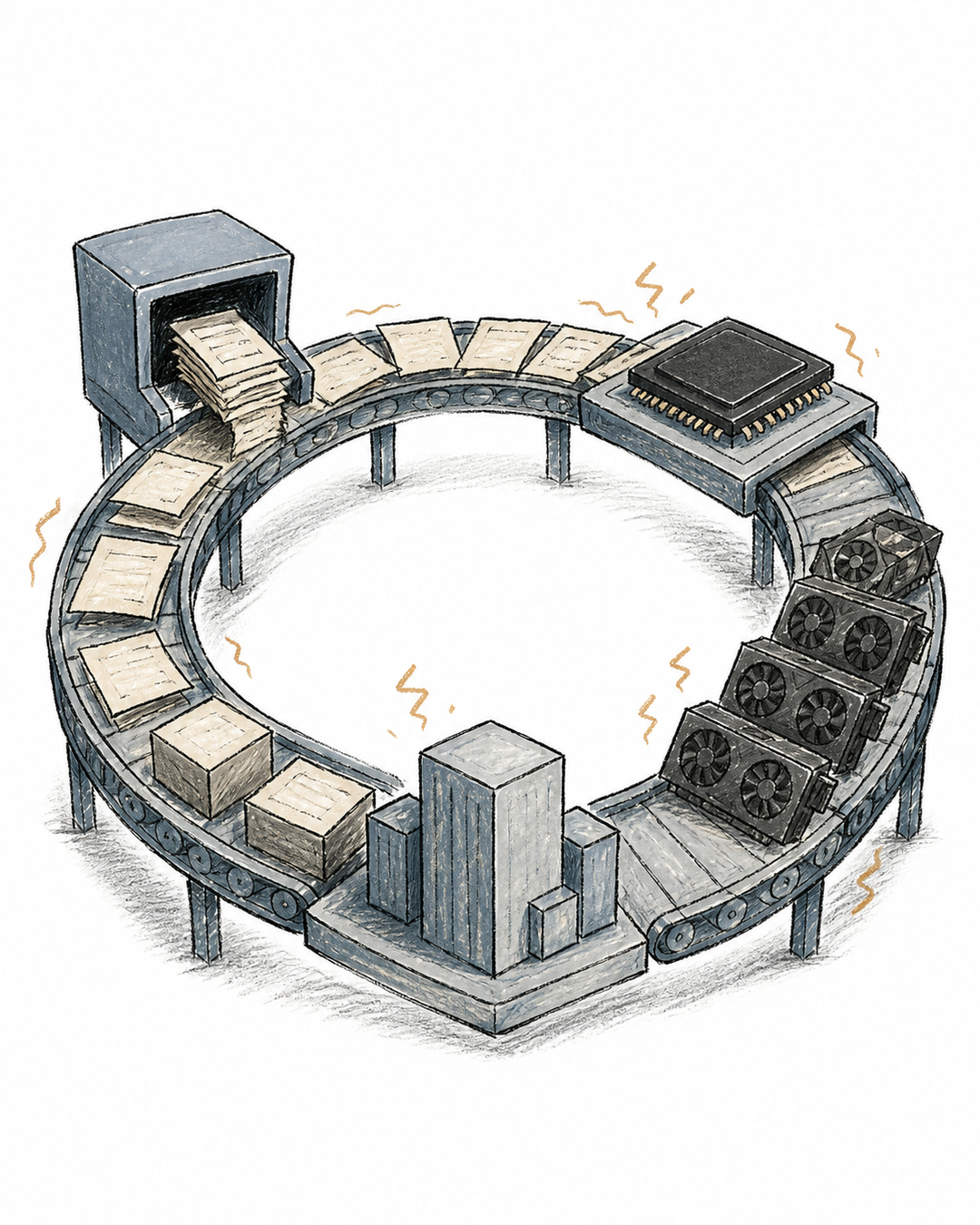
The core risk Burry has focused on is a circular financing model between Nvidia and its customers. The company provides customers with guarantees or financing, and the customers then use that money to buy Nvidia chips. Nvidia also continues to support its own business by holding equity in customers and providing residual-value guarantees.
In a post on X, Burry wrote that Nvidia would hold about 25% of the equity in the $500 billion transaction and provide residual-value guarantees for chip purchases. He said the entire process would be routed through private-credit mechanisms within private equity. “I know exactly what this will ultimately look like,” Burry wrote.
In his view, the arrangement appears to bring in external private credit but actually makes the industry’s subsidy system more complicated. He said the AI sector currently relies almost entirely on debt to operate, while Nvidia is using these mechanisms to “create demand for its own products,” pushing revenue higher on paper despite substantial future uncertainty and liabilities.
Comparison with the Enron scandal
Burry compared the current situation with the collapse of Enron in 2001. Enron used complex accounting operations to turn commodity trading into an “investable asset class” before ultimately going from a peak of $2.5 billion in daily trading to bankruptcy.
He urged investors to revisit Enron’s history, arguing that “history is repeating itself.” In his view, the AI bubble was formed in a similar way, while the accounting methods used in these enormous transactions also make balance sheets appear more acceptable. “There is nothing mysterious about why the revenue numbers look so impressive—even as losses are expanding, free cash flow turns negative and off-balance-sheet leverage grows explosively,” Burry wrote.
Investment managers had previously told Bloomberg that increasing amounts of capital were being used to fund future AI customers and infrastructure deployments, a development they said was troubling in itself. Burry also reposted related charts showing that Nvidia’s roughly $5 trillion valuation is largely tied to these circular AI contracts.
Potential market and economic effects
Burry said the practices affect more than Nvidia and raise questions about the foundations of the broader stock market and economy. The AI boom currently relies heavily on debt, and a shortfall in future earnings expectations could trigger a chain reaction.
He said the transaction had not eliminated his earlier concerns and had instead made the problems more complicated. In his view, the current “prosperity” is built on highly uncertain future earnings, while the accumulation of off-balance-sheet liabilities has reached an alarming level.